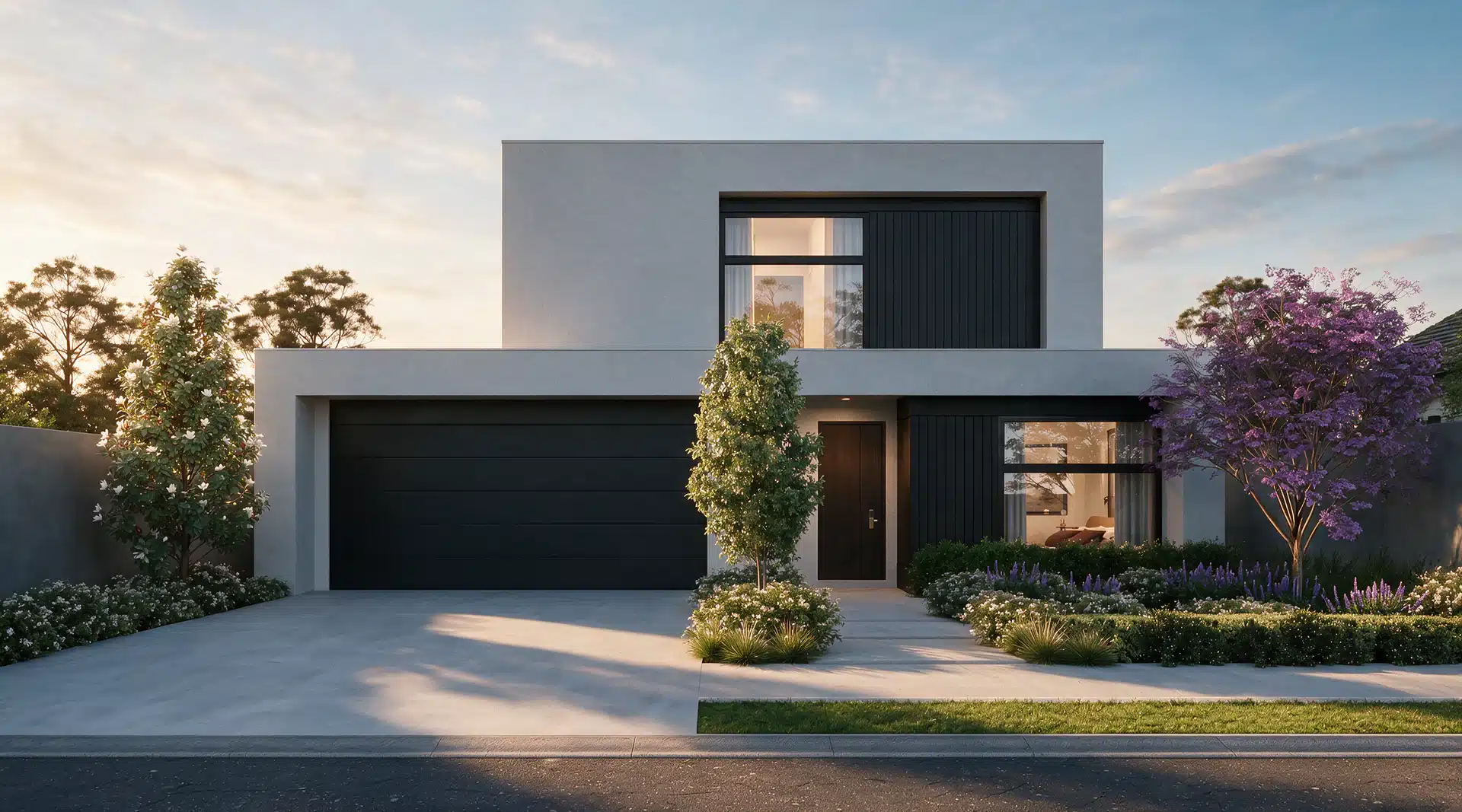
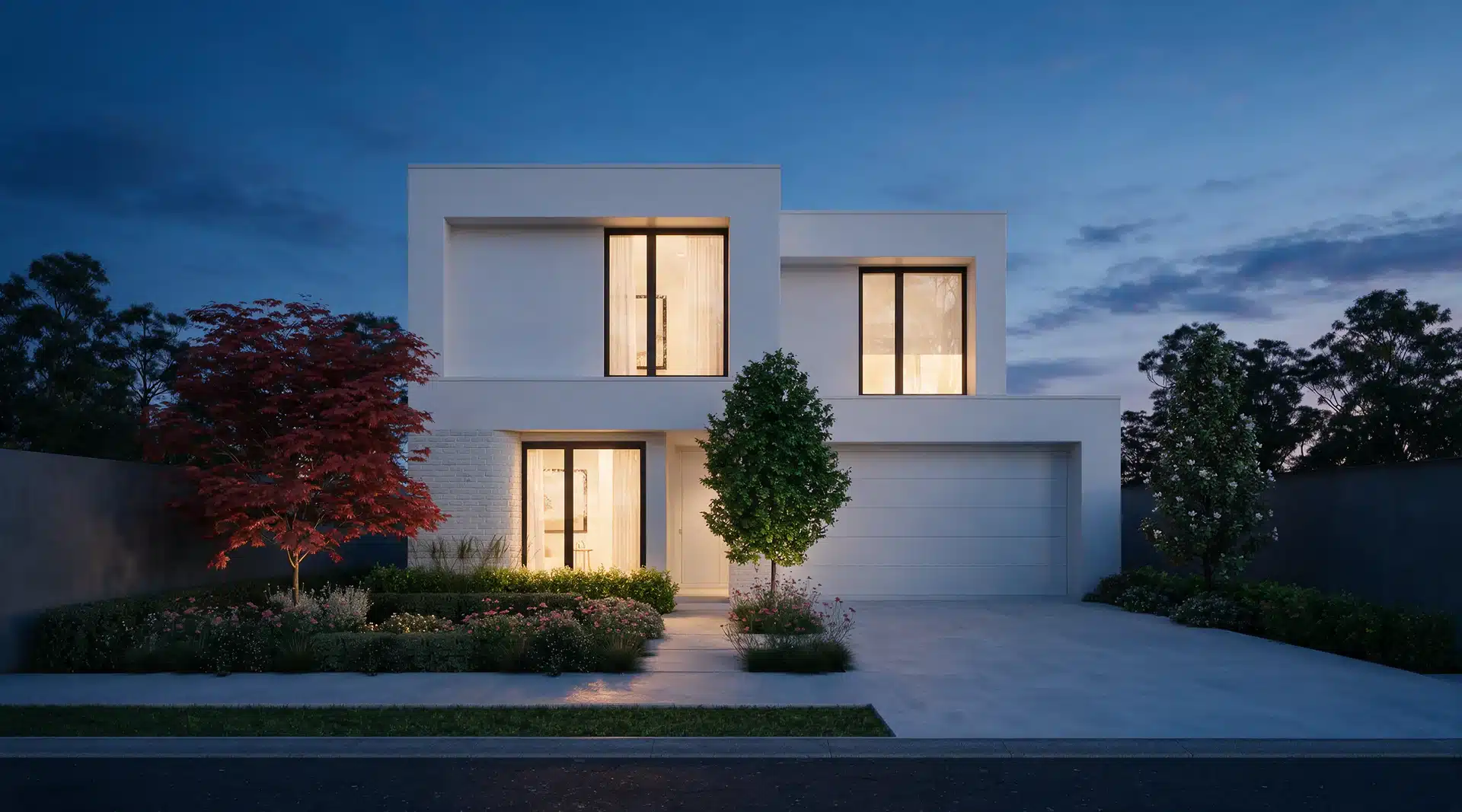
Understanding why a knockdown rebuild makes sense requires looking at the numbers, not just the appeal of a new house. Across Melbourne, established suburbs command land values that dwarf the cost of the structures sitting on them. A 600 square metre block in a suburb like Bentleigh, Reservoir, or Altona might be worth $800,000 to $1.2 million, while the 40 year old home on it adds little to no value. The economics are clear: you already own the most expensive component. Building a new home on that land for $350,000 to $550,000 creates a property worth significantly more than the sum of its parts.
This is why knockdown rebuild activity in Melbourne has accelerated year on year. Homeowners who love their suburb, their neighbours, their school zone, and their commute are choosing to replace the house rather than replace the address. If you are weighing up whether to renovate, move, or knock down and rebuild, this is the case for the third option. For a full overview of the KDR process, see our knockdown rebuild Melbourne guide.
Keep the Location You Love
The single most valuable attribute of any residential property is its location, and you cannot replicate it. Your proximity to schools, public transport, shops, parks, medical facilities, and your workplace is the product of years of suburb development and community growth. Moving to a new estate on the urban fringe might give you a brand new home, but it typically adds 30 to 60 minutes to your daily commute, removes you from established amenities, and places you in a suburb where infrastructure is still catching up to population growth.
A knockdown rebuild lets you keep everything that makes your current location work for your family while replacing the one thing that does not: the house. Your children stay in the same school. Your commute stays the same. Your social network stays intact. These are not sentimental considerations. They are practical, financial, and lifestyle factors that compound in value over decades of ownership.
Consider the alternative: selling your home in an established suburb to buy a newer property in the same area. In most established Melbourne suburbs, a modern four bedroom home sells for $1.2 million to $1.8 million. A knockdown rebuild on your existing land typically costs $350,000 to $550,000 for the build, plus $25,000 to $50,000 for demolition. Even accounting for the full project cost, you are almost always better off financially by rebuilding on your own land than buying an equivalent new home down the road.
Get a Brand New Home with Full Warranty
A knockdown rebuild delivers a brand new home covered by the full suite of statutory building warranties under Victorian law. Domestic Building Insurance covers structural defects for 6 years and non-structural defects for 2 years from completion, with a separate 10 year statutory limitation period within which legal action can be brought against a builder under the Building Act 1993. Every system in the home, from electrical wiring and plumbing to waterproofing and roofing, is new, code compliant, and backed by both the builder’s warranty and the individual manufacturer warranties on each component.
Compare this to a renovation, where new work is warranted but existing retained structures are not. The retained roof framing, original brickwork, existing slab, and ageing plumbing carry no warranty at all. Any future issue in the retained structure is entirely your cost to resolve.
A new build also means compliance with the current National Construction Code, updated significantly in recent years around waterproofing, fire resistance, accessibility, and energy efficiency. Building new means your home meets the highest compliance standard from day one and meets the expectations of future buyers if you ever sell.
Avoid the Compromises of Renovation
Renovation sounds appealing until you are three months into it and discovering that the existing floor is 40mm out of level, the original framing does not meet current tie-down requirements for the new roofline, and the council has rejected the rear extension because it triggers an overlooking clause your architect did not anticipate. Renovation is inherently constrained by the existing structure, the existing floor plan, and the existing compliance context of the original home.
Major renovations on older Melbourne homes typically cost $250,000 to $600,000, with budget frequently consumed by structural modifications, defect remediation, and the complexity of integrating new work with old. For a detailed comparison, read our knockdown rebuild vs renovation analysis.
The hidden cost of renovation is time. A major renovation drags on for 6 to 12 months with the homeowner living through dust, noise, and disrupted services. A knockdown rebuild runs for approximately the same duration, but the construction phase is more efficient on a clear site. You live elsewhere during the build and move into a completed home at the end.
Energy Efficiency That Reduces Your Bills
New homes in Victoria must achieve a minimum 7 star energy rating under the Nationwide House Energy Rating Scheme (NatHERS). This is a substantial performance standard that requires high quality insulation, double glazed windows, controlled air leakage, and efficient orientation and shading design. A home built to 7 stars uses approximately 40% to 60% less energy for heating and cooling than a typical home built in the 1980s or 1990s, which was designed to a 3 to 4 star equivalent.
At Senka, every home includes ducted air conditioning as a standard inclusion, and the building envelope is designed to minimise the load on that system. Stone benchtops, 900mm appliances, and timber flooring are also standard, but it is the performance of the building envelope, the insulation, the glazing, the sealing, that delivers the ongoing financial benefit through lower energy bills year after year.
Retrofitting an older home to achieve 7 star performance is technically possible but financially prohibitive. It requires replacing all windows, reinsulating walls and ceiling, sealing the envelope, and often modifying the floor plan. These interventions cost $80,000 to $150,000 and still produce a compromised outcome compared to a home designed for efficiency from the ground up.
Energy efficiency is also increasingly important for resale. Buyers in 2026 are more informed about energy costs than any previous generation, and a home with a verified 7 star rating is a tangible selling point that older homes cannot match without significant investment.
Design for How You Live Now, Not How Someone Lived 40 Years Ago
The floor plans of homes built in the 1970s and 1980s were designed for a different lifestyle. Formal lounge rooms that nobody uses. Small, enclosed kitchens separated from living areas. Narrow hallways. Minimal storage. Garages sized for cars that were 400mm narrower than today’s SUVs. The way Australian families live, work, and entertain in 2026 bears almost no resemblance to the domestic assumptions of 40 years ago.
A knockdown rebuild gives you a blank canvas to design a home that reflects how you actually use space today. Open plan kitchen, dining, and living areas that flow to an outdoor entertaining zone. A floor plan that positions bedrooms away from living areas for acoustic separation. A home office or study nook that accommodates hybrid work. A master suite with a proper walk-in wardrobe and ensuite. A butler’s pantry that keeps the mess out of the kitchen when you are entertaining. These are not luxury features. They are the standard expectations of a modern Australian home.
At Senka, our standard inclusions reflect this shift: landscaping, fencing, blinds, a designed facade, driveway, ducted air conditioning, Opticomm fibre, stone benchtops, 900mm appliances, timber flooring, and square-set cornices. These are not upgrades. They are built into every home because they are what a modern home should include from the start.
The Value Uplift on Your Existing Land
A knockdown rebuild creates a value uplift that no renovation can match. When you replace a dated, low performing home with a modern, energy efficient, fully warranted new build, the property’s market value increases by the construction cost and then some. In many established Melbourne suburbs, the new home creates a premium above its replacement cost because buyers pay more for new construction in an area where new homes are scarce.
Consider the numbers. A 1970s three bedroom home on a 600 square metre block in an established middle ring suburb might be valued at $950,000. The land component of that value is $800,000 to $850,000, meaning the existing structure adds only $100,000 to $150,000. Build a new four bedroom, two bathroom home on that land for $450,000 (including demolition and all site costs), and the completed property is likely to be valued at $1.3 million to $1.5 million. That is a gross uplift of $350,000 to $550,000 on a $450,000 investment, driven entirely by the scarcity of new homes in established areas.
This value uplift also protects you in a down market. New homes in established suburbs hold their value more consistently because they appeal to a broader buyer pool. If you ever need to sell, your knockdown rebuild home competes at the top of the local market rather than the middle or bottom.
Frequently Asked Questions
Is it worth knocking down a house and rebuilding?
In most cases, yes, particularly if your land value significantly exceeds the value of the existing structure. A knockdown rebuild is worth it when the cost of building new on your existing land is less than buying an equivalent modern home in the same area, when renovation costs would exceed 50% to 60% of the build cost for a new home, or when the existing structure has fundamental issues such as poor orientation, structural defects, or non-compliant construction that make renovation impractical. The decision comes down to numbers: compare the total KDR cost against the cost of selling, buying elsewhere, and factoring in stamp duty, agent fees, and the difference in location quality.
Do you save money with a knockdown rebuild?
Compared to buying a new or near new home in the same suburb, a knockdown rebuild almost always costs less because you are not paying for the land component again. You avoid stamp duty on a new purchase (which on a $1.3 million property in Victoria is approximately $70,000), you avoid real estate agent selling fees on your current home (typically 1.8% to 2.5% of the sale price), and you retain the capital growth potential of your existing land. Compared to a major renovation, the cost is often similar, but the outcome is a fully new, fully warranted home rather than a hybrid of old and new.
What are the benefits of knocking down and rebuilding?
The primary benefits are: retaining your existing location and land value, building a home designed to current building standards with full statutory warranties, achieving a 7 star energy rating that reduces ongoing living costs, designing a floor plan that suits your current lifestyle, and creating a value uplift on your property that exceeds the construction cost. Secondary benefits include avoiding the compromises and uncertainties of renovating an older structure, eliminating the transaction costs of selling and buying, and building with modern materials and systems that require less maintenance.
Does a new build add value to established area land?
Yes, and the effect is amplified in established areas because new homes are scarce. In a street where every other home was built in the 1970s or 1980s, a modern new build stands out to buyers and commands a premium above what the land and construction cost alone would suggest. This scarcity premium is well documented in Melbourne’s middle ring suburbs, where knockdown rebuild properties consistently sell above the sum of their land value and construction cost. The value add is strongest when the new home is well designed, energy efficient, and includes finishes and features that meet current buyer expectations.
Standard inclusions such as front and rear landscaping, full boundary fencing and a concrete driveway apply to Senka house and land packages. On custom builds and knockdown rebuilds the inclusion list is set by your building contract.