Understanding what is included in a house and land package is the single most important step before signing a building contract. Most advertised package prices in Melbourne cover the land and a base house design. What they do not cover is everything you need to actually move in. Landscaping, fencing, driveways, blinds, air conditioning, and quality fixtures are routinely excluded from base pricing. Buyers discover this after the deposit is paid, when the variation list arrives and the budget starts to shift.
This article breaks down what most builders include as standard, what they leave out, what those gaps actually cost, and how Senka approaches inclusions differently. If you are comparing packages, this is the checklist that will save you from a $40,000 surprise.
What Most Builders Include in a Base Package
A standard house and land package from a volume builder in Melbourne will typically include the following items in the base contract price.
Land. The lot itself, purchased from a developer or estate at an agreed price. This is a separate contract from the building agreement, and stamp duty applies only to this component.
Home design. A floor plan selected from the builder’s standard range, configured to meet the lot dimensions, orientation, and estate covenant requirements.
Standard site costs or allowance. Most builders include either a fixed site cost figure or an allowance based on assumed soil conditions. The allowance often covers an M class site classification. If the geotechnical report reveals reactive clay, the cost increases and the buyer pays the difference.
Basic internal fixtures. Builder grade tapware, laminate benchtops, basic cabinetry, and standard tile selections. These are functional but rarely match the finishes shown in display homes.
Structural elements. Slab, frame, roof, brickwork, cladding, windows, and internal linings. Structurally complete and compliant with the National Construction Code.
Statutory costs. Building permits, energy assessments, engineering, and council fees are typically covered within the building contract.
What this gives you is a structurally complete house that meets minimum compliance requirements. It does not give you a finished, liveable home. The gap between those two things is where the real cost sits.
What Most Builders Leave Out (That You Will Need to Pay For)
This is the list that catches buyers. Every item below is something you will need before you can comfortably move into a new home. Most volume builders exclude all of them from the base contract price.
Landscaping. Front and rear landscaping, including turf, garden beds, retaining walls, and irrigation. Most estates require landscaping to be completed within a set timeframe after occupation, so this is not optional. It is a compliance obligation.
Fencing. Side and rear fencing is almost always excluded. In new estates, boundary fencing is typically a shared cost with neighbours, but the builder’s contract rarely covers it.
Concrete driveway and paths. The driveway, crossover, and any external paths are frequently omitted.
Window furnishings. Blinds, curtains, or shutters are excluded from nearly every base package. Every window needs covering for privacy, light control, and energy performance.
Air conditioning. Heating and cooling is not included in most base contracts. Some builders offer a split system as an upgrade. Ducted heating and cooling, which is the appropriate system for a home designed to a 7 star energy rating, is almost always additional.
Architectural facade. The face of the home as shown in marketing material is rarely the face you receive at base price. Rendered facades, feature cladding, and portico details are treated as upgrades. What you get at base price is typically face brick with minimal detailing.
Premium fixtures and finishes. Stone benchtops, 900mm appliances, quality tapware, timber flooring, and square set cornices are all upgrade items for most builders. The display home you walked through included all of them. The base contract does not.
Opticomm or fibre connectivity. In estates serviced by Opticomm rather than NBN, the connection cost is borne by the homeowner. Most builders do not include it.
These are not luxury items. They are the basic requirements of a finished home. Excluding them allows builders to advertise a lower headline number, knowing that the real cost will emerge through variations once the contract is signed.

The Real Cost of “Extras” Across a Typical Build
When you total up the items that most builders leave out of a standard house and land package, the numbers are significant. These are realistic Melbourne market ranges for 2026.
- Landscaping (front and rear): $8,000 to $18,000
- Fencing (three boundaries): $5,000 to $10,000
- Concrete driveway and crossover: $4,000 to $8,000
- Blinds throughout: $3,000 to $7,000
- Ducted air conditioning: $8,000 to $14,000
- Facade upgrade (render, cladding, feature elements): $5,000 to $12,000
- Stone benchtops: $3,000 to $6,000
- 900mm appliances: $1,500 to $3,500
- Timber flooring to living areas: $4,000 to $9,000
- Square set cornices: $2,000 to $4,000
- Opticomm connectivity: $1,500 to $3,000
Total additional cost: $45,000 to $94,500
The midpoint of that range is approximately $65,000 in items that are not included in the contract you signed. That is the gap between the price you were quoted and the price you actually pay to move in.
This is how the industry operates at the volume end of the market. Builders compete on headline price because that is what comparison websites and first conversations prioritise. The inclusions are addressed later, when switching builders means losing your deposit and starting again.
Understanding the total cost to build a house in Melbourne requires looking at every line item, not just the contract sum.
What Senka Includes as Standard
Senka’s approach to inclusions is different. Every house and land package we deliver includes the following items in the base contract price, not as upgrades, not as options, and not as variations after contract signing.
Landscaping and fencing. Full front and rear landscaping including turf, garden beds, and planting. Side and rear boundary fencing included.
Blinds throughout. Roller blinds to every window. Not a credit note. Not a voucher. Installed blinds, ready at handover.
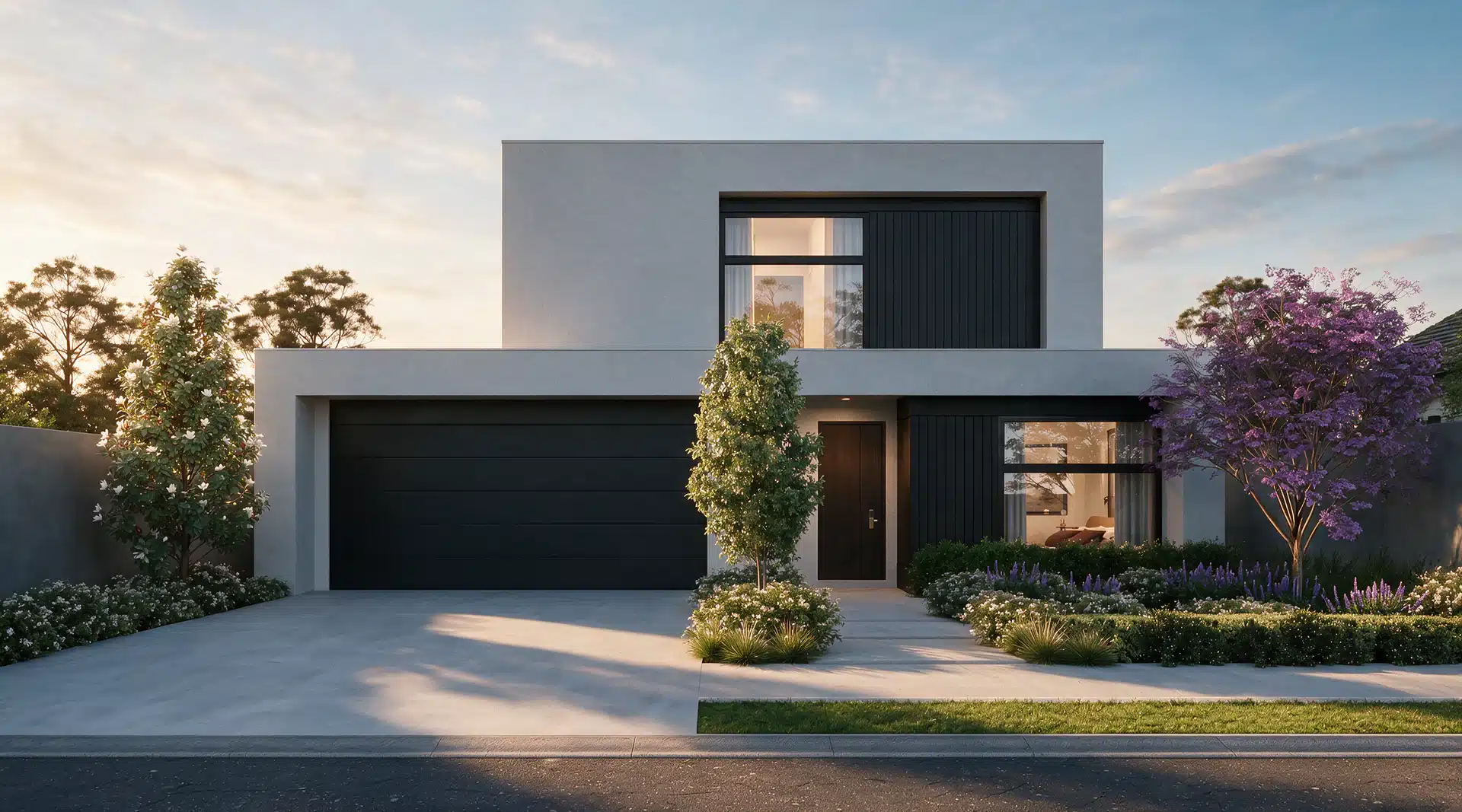
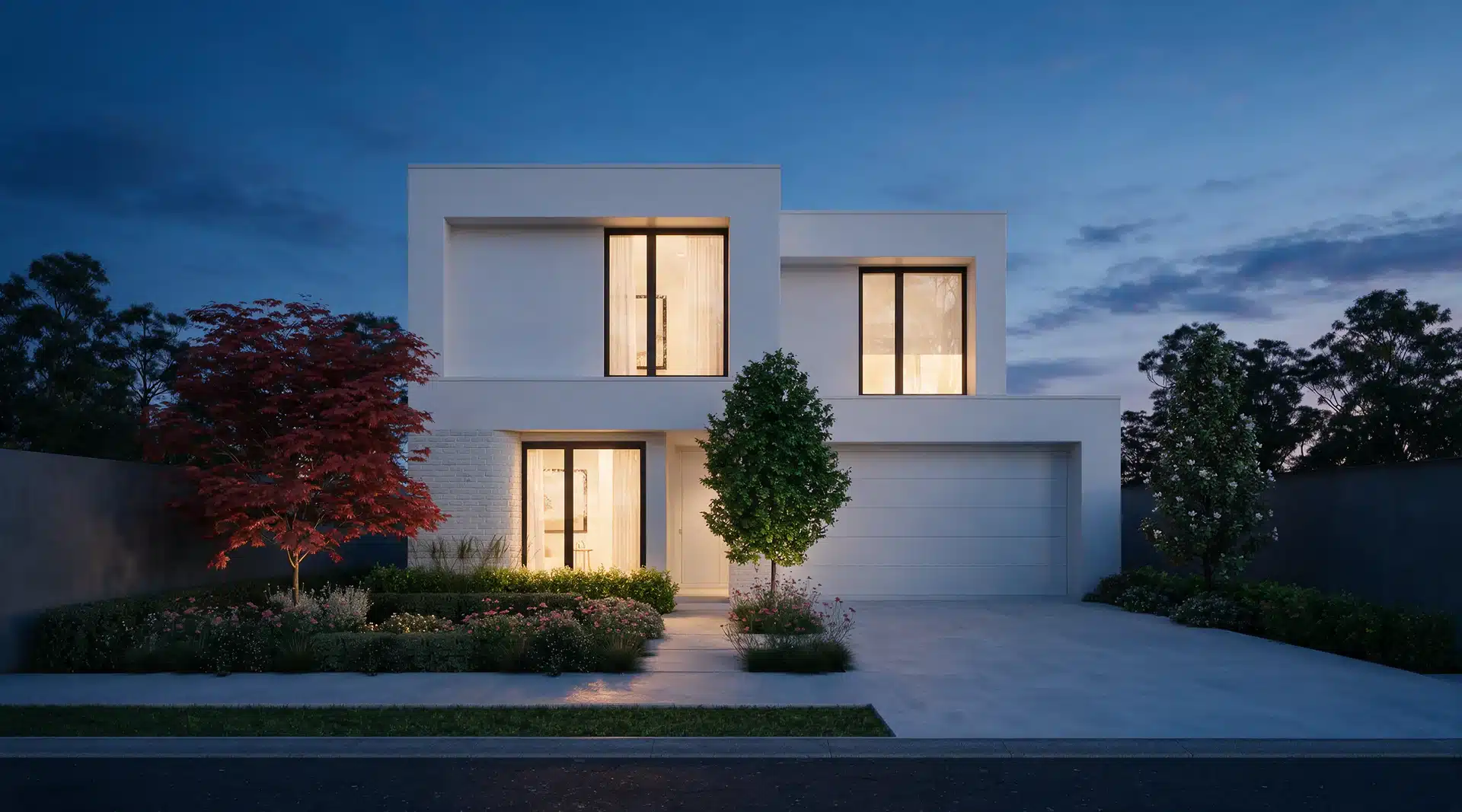
Architectural facade. Render, cladding, or feature materials appropriate to the home design. The face of your home will match the images you were shown, because the facade is priced into the contract from day one.
Concrete driveway. Full concrete driveway and crossover, finished and ready for use on the day you collect your keys.
Ducted air conditioning. A ducted reverse cycle system sized to the home. Not a single split system in the living room. Whole of home heating and cooling that works with the energy rating of the build.
Opticomm connectivity. Where the estate is serviced by Opticomm, the connection is included.
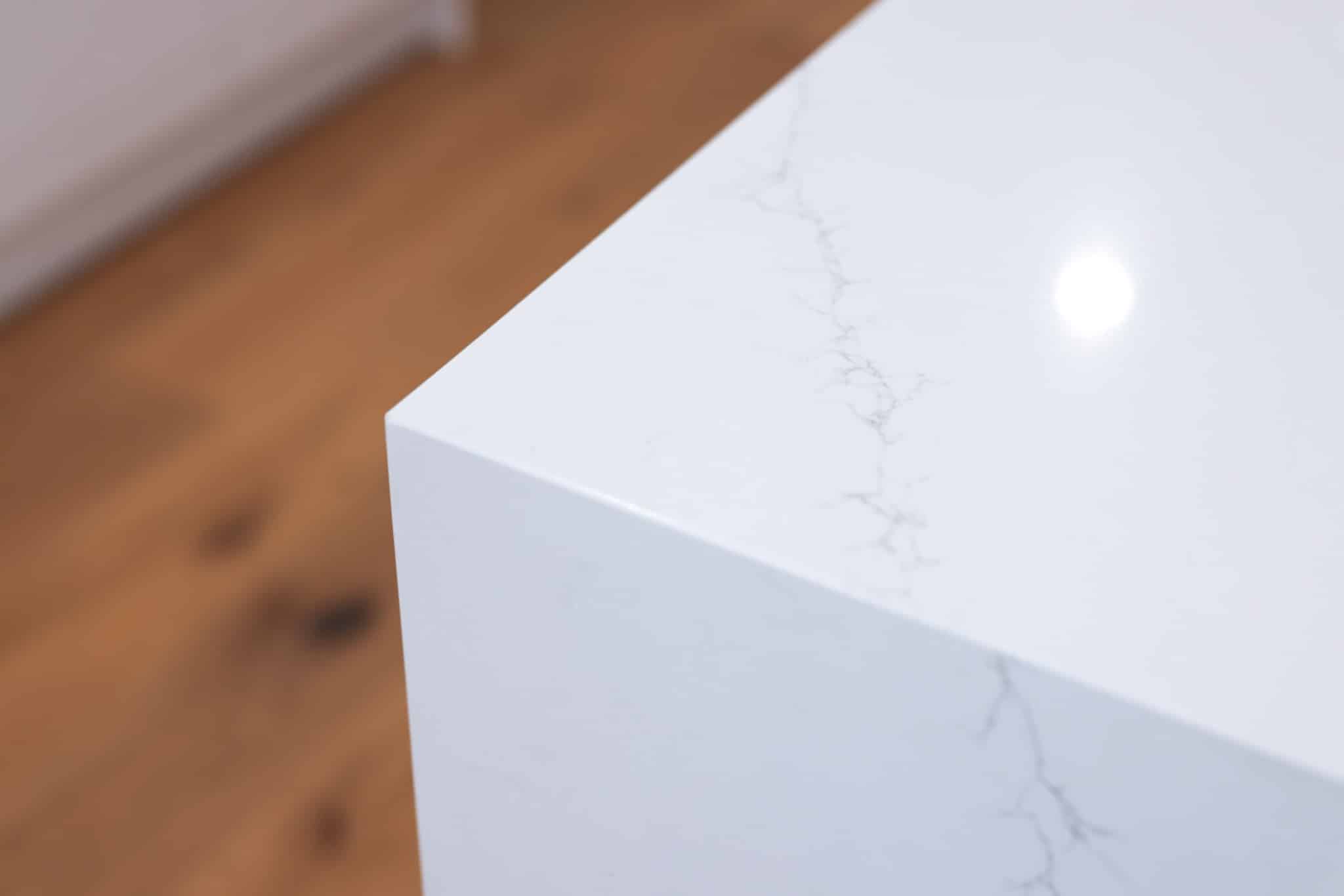
Premium fixtures and finishes. Stone benchtops to kitchen and bathrooms. 900mm cooktop and oven. Quality tapware throughout. The finishes you see in our display homes are the finishes you receive in your home.
Timber flooring. Timber look flooring to living areas as standard. Not carpet. Not vinyl sheet.
Square set cornices. Clean, modern cornice detailing throughout. A finish that every architect specifies and most volume builders charge extra for.
7 star energy rating as baseline. Every Senka home is designed and built to meet or exceed the 7 star NCC energy rating. This is the engineering standard we build to.
What others call upgrades, we call standard.
This is the specification schedule attached to every Senka building contract. When we quote a package price, the price reflects a home that is complete, liveable, and finished to a standard that does not require $50,000 in post contract spending.
For a broader look at how to evaluate a builder, see our guide on how to choose a home builder in Melbourne.
Why Inclusions Matter More Than Base Price
The base price of a house and land package is a starting point. It is not the price you will pay. Every buyer in Melbourne is told this at some stage, usually after they have already committed.
The reason inclusions matter more than the headline figure is simple. A lower base price with fewer inclusions will almost always cost more in total than a higher base price with a comprehensive inclusion set. The maths does not lie.
Consider two packages for the same sized home on a comparable lot.
Builder A quotes $420,000. The contract excludes landscaping, fencing, driveway, blinds, air conditioning, facade upgrade, and premium finishes. After variations, the real cost reaches $480,000 to $500,000.
Builder B quotes $465,000. The contract includes all of those items as standard. The price at signing is the price at handover.
Builder A looks cheaper on paper. Builder B is cheaper in practice. The $45,000 difference in base price disappears once the excluded items are accounted for, and Builder A’s total ends up higher.
This pattern repeats across the industry. Low base prices attract inquiries. Variations capture margin. The client absorbs the cost because by the time the variations are presented, the land is settled and walking away means starting from scratch.
Senka prices honestly from the start. Our base price is our real price because it includes everything the home needs. The total cost is the same or lower because we are not layering margin onto upgrade items that should have been included from day one.
This is one of the most common building mistakes buyers make. The cheapest quote is rarely the cheapest home.
How to Compare Inclusions Between Builders
Comparing house and land packages on price alone is the fastest way to make a bad decision. Here is how to compare properly.
Request the full specification schedule. Every building contract should have a detailed specification listing every item, finish, brand, and model included in the price. If the builder cannot produce one before you sign, that is a red flag.
List every item you need to move in. Create your own checklist: landscaping, fencing, driveway, blinds, heating and cooling, facade treatment, flooring, benchtops, appliances, and connectivity. Check each against the builder’s specification. If it is not listed, it is not included.
Ask for a fixed site cost, not an allowance. Builders who quote a site cost allowance are leaving the door open for additional charges. Ask whether the site cost is based on a geotechnical report for the specific lot you are purchasing.
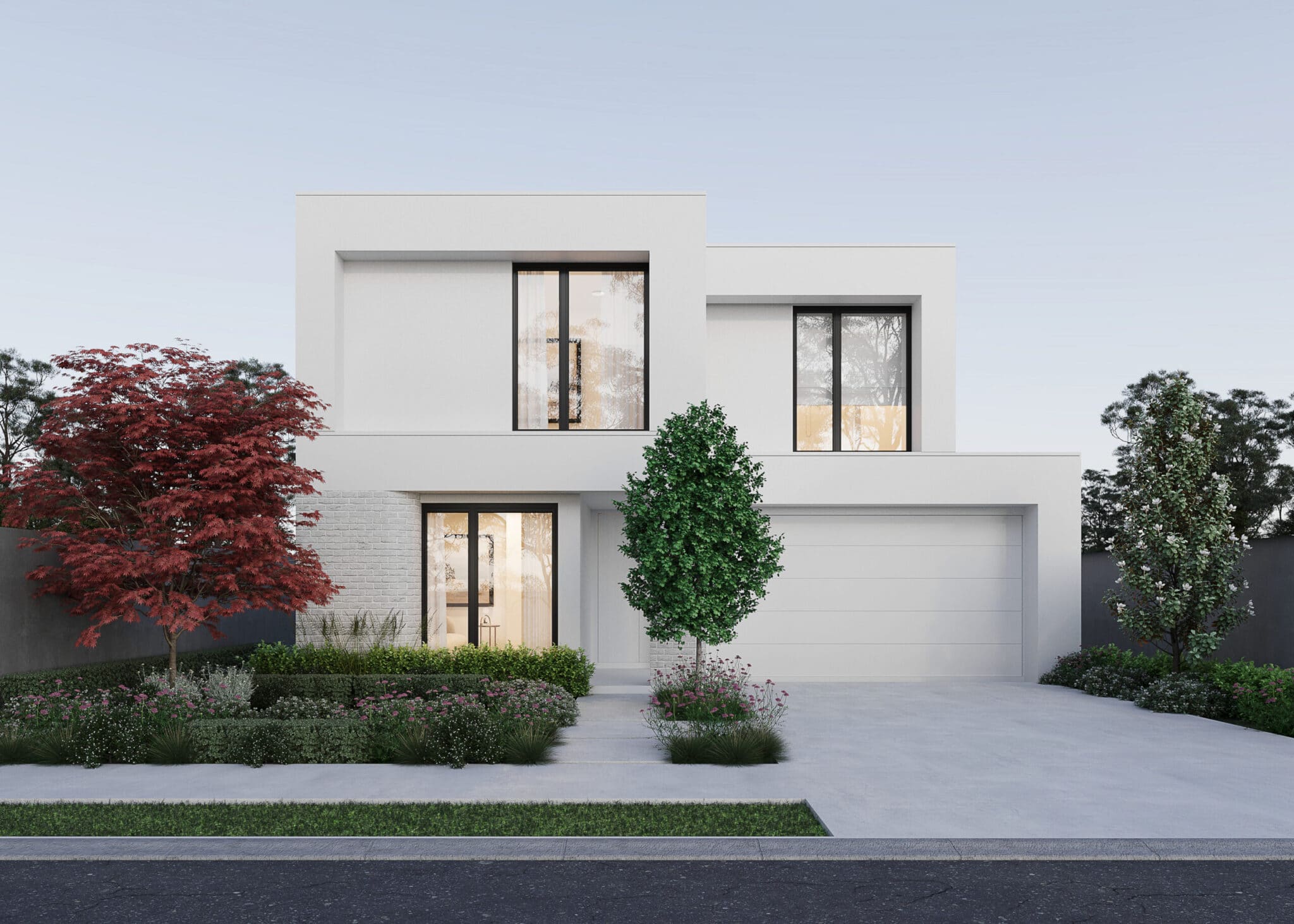
Compare the facade in the image to the facade in the contract. Display images show rendered, clad, and detailed facades. Base contracts often specify face brick with no feature elements. Ask whether the facade shown is included in the quoted price.
Check the energy compliance approach. All new homes must meet a 7 star energy rating. Some builders specify minimum compliant glazing and insulation, then charge extra for efficient HVAC. Others engineer the home as a complete system from the outset.
Get the variation history. Ask the builder for the average variation cost on their last 10 completed homes. A builder with comprehensive inclusions will have a low variation average because there is less to add.
Read the contract, not the brochure. The marketing material is aspirational. The contract is binding. Every inclusion you expect should appear in writing in the specification schedule or it does not exist.
Understanding the full house and land package process will help you ask the right questions at each stage.
Side by Side Comparison: Senka Standard vs Typical Builder Base
The following table compares what Senka includes as standard against what a typical volume builder includes in their base house and land package price.
| Inclusion Item | Typical Builder Base | Senka Standard |
|---|---|---|
| Landscaping (front and rear) | Not included | Included |
| Side and rear fencing | Not included | Included |
| Concrete driveway and crossover | Not included | Included |
| Blinds throughout | Not included | Included |
| Ducted air conditioning | Not included (split system upgrade available) | Included (ducted reverse cycle) |
| Architectural facade | Face brick only | Rendered/clad facade included |
| Stone benchtops | Laminate standard | Stone to kitchen and bathrooms |
| 900mm appliances | 600mm standard | 900mm cooktop and oven |
| Timber flooring to living areas | Carpet or vinyl | Timber look flooring included |
| Square set cornices | Coved cornice standard | Square set throughout |
| Opticomm connectivity | Not included | Included |
| 7 star energy rating | Minimum compliance | Engineered as baseline |
| Premium tapware and fixtures | Builder grade | Quality fixtures throughout |
| Estimated additional cost to match Senka spec | $45,000 to $65,000 | $0 |
The difference in real terms is $45,000 to $65,000 in additional spending that a typical buyer would need to outlay after signing a base contract with another builder. Senka’s package price reflects the complete home. There is no second price.
Not base price versus base price. Complete home versus complete home. When measured that way, Senka’s packages consistently deliver equal or better value than builders who advertise a lower headline number.
For buyers evaluating house and land packages in Melbourne, the inclusion set is the single most important factor in determining genuine value.
Frequently Asked Questions
What is included when you build a new house?
A standard new build includes the structural components: slab, frame, roof, brickwork, cladding, windows, internal linings, basic fixtures, and statutory approvals. What it does not always include is landscaping, fencing, driveways, blinds, air conditioning, upgraded facades, and premium fixtures. These vary between builders and should be confirmed in the specification schedule before signing. At Senka, all of these items are included in the standard contract price.
Do house and land packages include landscaping?
Most house and land packages in Melbourne do not include landscaping in the base price. It is one of the most commonly excluded items. Estate covenants typically require landscaping to be completed within 6 to 12 months of occupation, which means it is not optional. You will need to budget for it separately unless your builder includes it as standard. Senka includes full front and rear landscaping in every package.
What are upgrades vs standard inclusions in a new home?
Standard inclusions are the items specified in the base building contract. Upgrades are items the buyer selects and pays for as variations. The distinction matters because builders define “standard” differently. One builder’s standard inclusion may be another builder’s upgrade. Stone benchtops, ducted air conditioning, architectural facades, and timber flooring are all items that some builders list as upgrades but Senka includes as standard.
What should be included in a new build?
A complete new build should include everything required to move in and live comfortably. Beyond the structural home, this means landscaping, fencing, a driveway, window furnishings, heating and cooling, quality fixtures, proper flooring, and internet connectivity. If you need to spend $40,000 to $60,000 after handover to reach that point, those items were never truly included. The test is simple: can you move in the day you get the keys without commissioning additional work?
Standard inclusions such as front and rear landscaping, full boundary fencing and a concrete driveway apply to Senka house and land packages. On custom builds and knockdown rebuilds the inclusion list is set by your building contract.