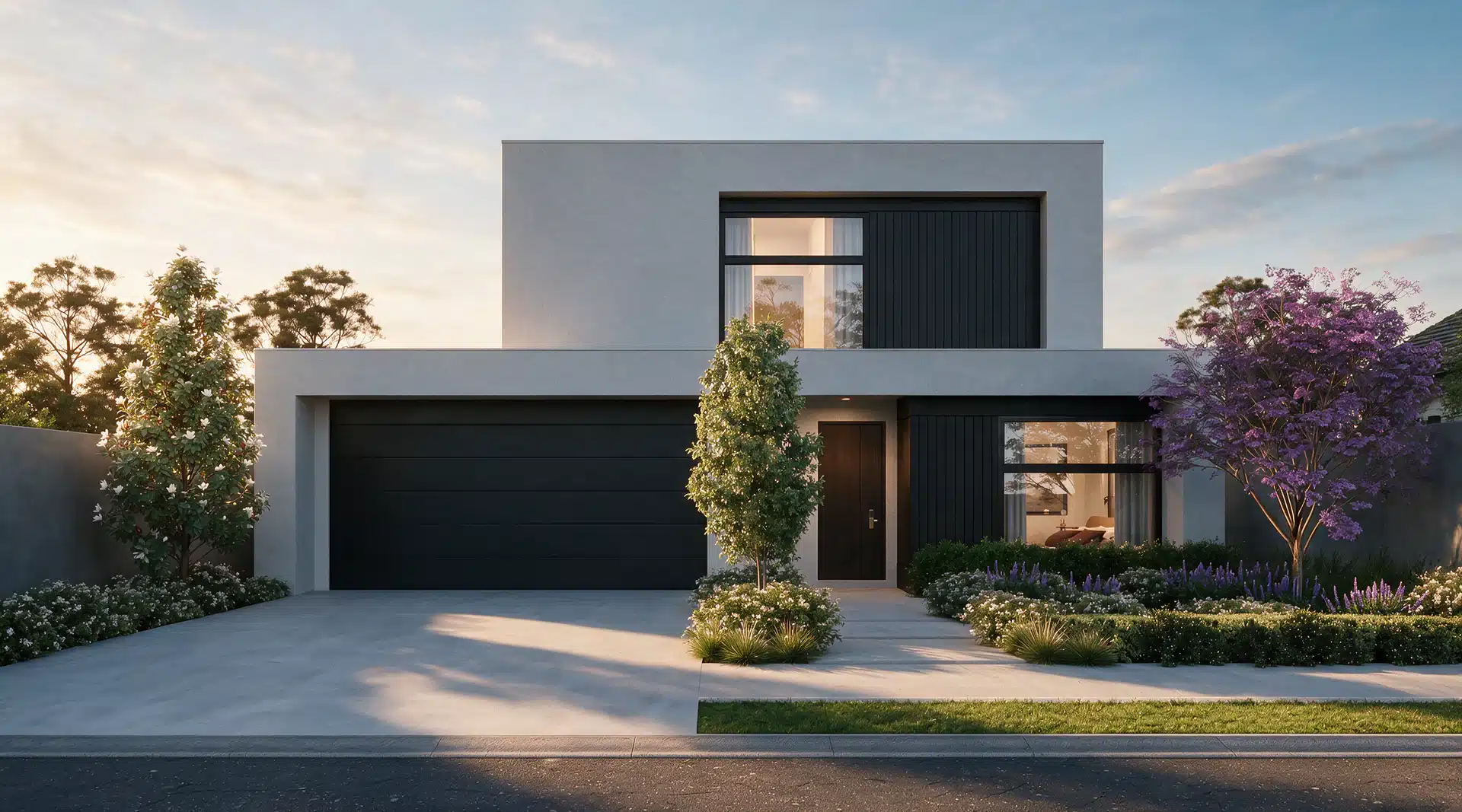
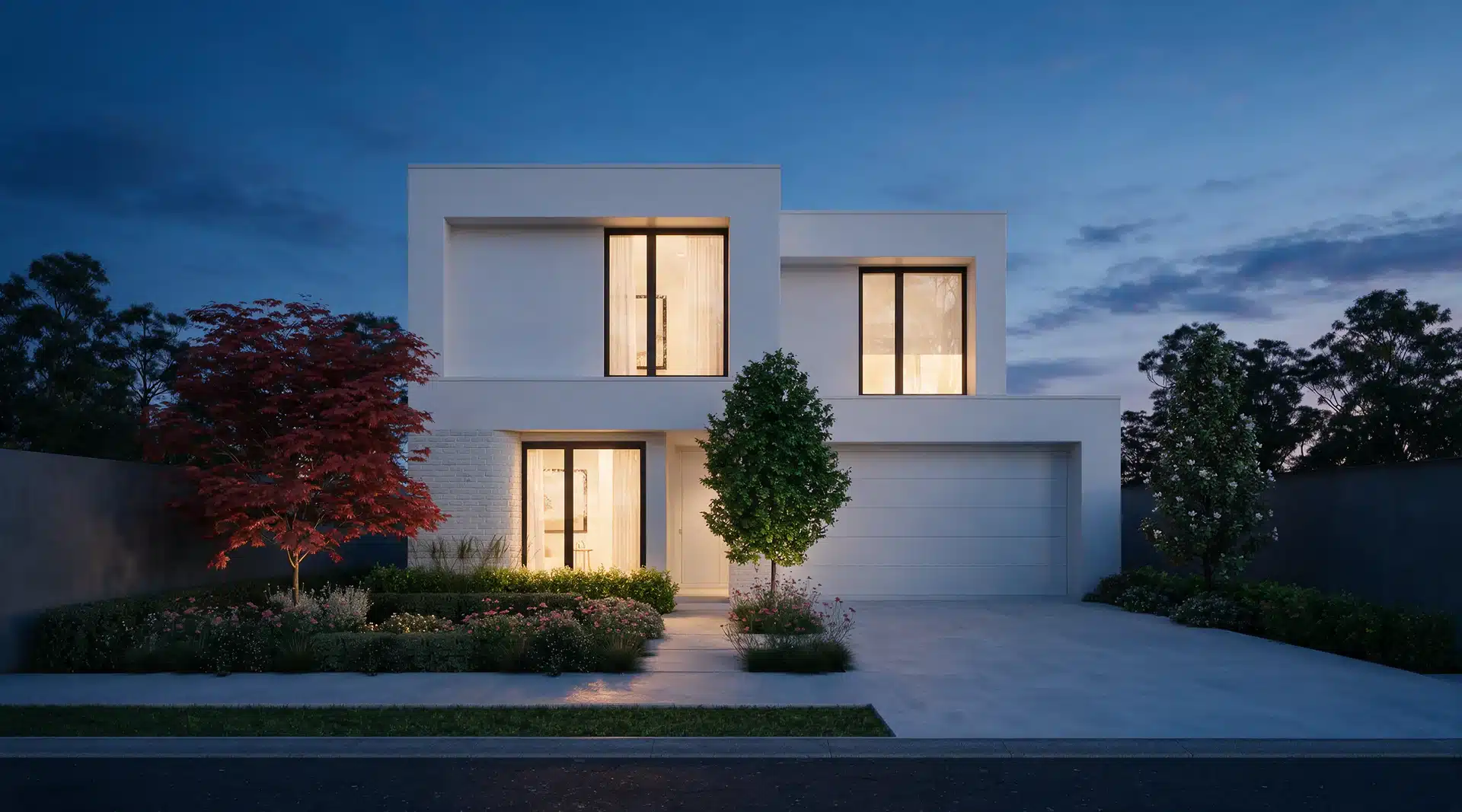
A house and land package is an agreement to purchase a block of land and a new home together as a single transaction. The land is sourced from a developer or estate, and the home is designed and built by a registered builder. It is the most common way to build a new home in Melbourne, and for good reason. The structure offers price certainty, stamp duty savings, and a coordinated process from contract to keys.
If you are trying to understand what is a house and land package, how the process actually works, and what to look out for before signing, this guide covers everything in plain terms.
House and land packages account for the majority of new home construction in Melbourne’s growth corridors. They work for first home buyers, investors, and owner occupiers who want a new build without the complexity of managing land and builder selection as separate projects.
Once you understand how a package works, our guide to house and land packages in Melbourne covers where to look, what to compare and what to watch for.
What Is a House and Land Package?
A house and land package combines two purchases into one coordinated process. You buy a block of land from a developer and enter a building contract with a builder for a specific home design on that land.
The land component is typically a titled or near titled lot in a new estate or subdivision. The building component is a home design selected from the builder’s range or modified to suit your requirements and the block’s orientation, dimensions, and covenant rules.
The two elements are linked but legally separate. This is important. You are entering two contracts, not one, and the distinction matters for stamp duty, finance, insurance, and settlement timing.
The appeal is straightforward. You get a new home built to current standards, on a specific block, for a defined price. You are not searching for land and then separately tendering builders. The builder has already assessed the block, confirmed the design fits, and priced the build.
For buyers, this removes a significant amount of guesswork. For builders, it creates a more efficient delivery model. Both sides benefit from a scope that is agreed early.
House and land packages are available across Melbourne, from growth corridor estates in Tarneit, Mernda, and Armstrong Creek to infill opportunities in established suburbs. The inclusions vary significantly between builders, which is why understanding the structure matters before you compare.
How Does the Process Work From Start to Finish?
The process from first inquiry to handover follows a defined sequence. Understanding this helps you plan your finances, manage timelines, and avoid surprises.
Step 1: Select the land and the design. You choose a block of land from an available estate and a home design that fits the block. The builder will assess the lot dimensions, orientation, covenant requirements, and any estate design guidelines before confirming the design is suitable.
Step 2: Enter two contracts. You sign a land purchase contract with the developer and a building contract with the builder. These are separate legal agreements with separate terms and conditions. Most buyers sign them within the same week, but each has its own deposit, conditions, and timeline.
Step 3: Land settlement. Once the land titles, you complete settlement and take ownership of the block. In new estates, this can be anywhere from a few weeks to 12 months or more depending on civil works and developer timelines. Your construction loan or land loan activates at this point.
Step 4: Pre construction approvals. Before building starts, the builder arranges geotechnical testing, site classification, working drawings, engineering, and building permits. This phase typically takes 8 to 16 weeks depending on council, surveyor, and developer approval timelines.
Step 5: Construction. Building commences once the permit is issued and the site is prepared. A standard home build in Melbourne takes 7 to 10 months depending on design complexity, site conditions, and weather. Construction is funded through progress payments drawn from your construction loan at defined stages.
Step 6: Inspections and handover. The home is inspected at each stage by a registered building surveyor. Once practical completion is reached, you receive a final walkthrough, occupancy permit, and keys.
The entire process from contract signing to handover typically spans 12 to 18 months for a titled lot, and up to 24 months where land is untitled and settlement is delayed.
For a detailed look at each construction stage, see our guide to the 7 stages of building a home.
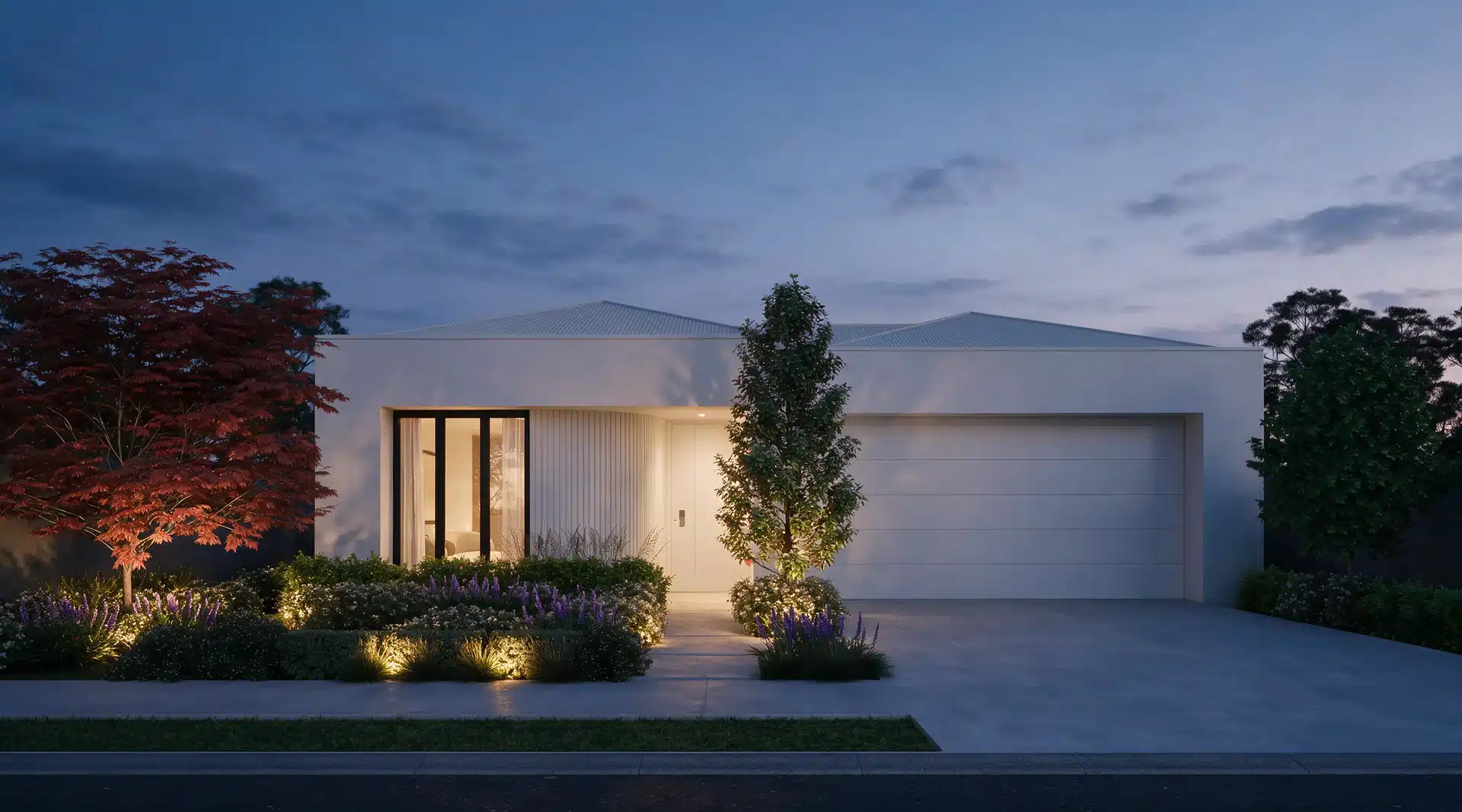
What Is Typically Included (and What Is Not)
This is where house and land packages vary the most between builders, and where the most money is lost by buyers who do not read the detail.
What is usually included:
- The land at an agreed purchase price
- A home design with fixed specifications
- Standard site costs (often as an allowance, not a fixed sum)
- Internal fixtures and fittings as per the contract specification
- Council and statutory fees covered by the building contract
What varies between builders:
Some builders include a comprehensive package. Others advertise a base price and then add everything else as a variation or upgrade. This is the critical distinction.
Items that are often excluded in base packages but should be expected in a complete home:
- Landscaping, fencing, and driveway
- Window furnishings
- Air conditioning
- Upgraded facades
- Quality fixtures and tapware
- Internet and data connectivity
A package priced at $450,000 that excludes landscaping, fencing, a driveway, blinds, and air conditioning is not comparable to one priced at $490,000 that includes all of them. The second package is almost certainly better value, but the headline number will not tell you that.
The key question when reviewing any package is: what do I need to spend after the contract to actually move in? If the answer is $30,000 to $50,000 in extras, the advertised price was never the real price.
For a complete breakdown of what should and should not be included, see our guide on what is included in a house and land package.
How Two Contract Structures Work
House and land packages in Australia are structured as two separate contracts. This is not a technicality. It is a deliberate legal and financial structure that carries real advantages for the buyer.
Contract one: the land. This is a standard property purchase agreement between you and the land developer. It covers the lot, the price, settlement terms, and any conditions such as title registration timelines. You pay a deposit, and settlement occurs once the land is titled and registered.
Contract two: the building contract. This is a domestic building contract between you and the builder, governed by the Domestic Building Contracts Act 1995 in Victoria. It covers the design, specifications, inclusions, price, construction timeline, and progress payment schedule.
The two contracts are linked commercially but independent legally. Each has its own deposit, its own conditions, and its own timeline. This matters in several ways.
Finance. Your lender will assess both contracts together when approving your construction loan, but the drawdowns happen at different points. The land component settles first. Construction funding follows as progress claims are submitted during the build.
Insurance. The builder must hold domestic building insurance for any contract over the threshold set by the Victorian Building Authority. The two contract structure allows the building component to be scoped and insured independently of the land value.
Risk allocation. If land settlement is delayed, the building contract does not automatically commence. If the builder encounters unexpected site conditions, variations are managed under the building contract, not the land contract. The separation keeps the risk where it belongs.
Cooling off. Both contracts carry cooling off periods under Victorian law. The land contract allows three business days. The building contract allows five business days. These are independent, so you have separate windows to review each commitment.
Builders who explain the two contract structure openly are typically the ones with nothing to obscure in their pricing.
Stamp Duty Advantages of House and Land Packages
Stamp duty on a house and land package is one of the most significant financial advantages of building new versus buying established.
When you buy an existing house, stamp duty is calculated on the total purchase price. On a $700,000 established home in Victoria, stamp duty is approximately $37,000 for a general buyer.
When you buy a house and land package, stamp duty is only calculated on the land component, not the building contract. If that same $700,000 value is split as $300,000 for land and $400,000 for the building contract, stamp duty applies to $300,000 only. That brings the duty down to approximately $13,000.
That is a saving of roughly $24,000 on the same overall investment. For first home buyers purchasing under the relevant threshold, the saving is even greater because exemptions and concessions apply to the land value, which is the lower figure.
First home buyer exemptions in Victoria:
- Full stamp duty exemption on properties valued up to $600,000
- Concessions on properties valued between $600,001 and $750,000
- For house and land packages, the threshold applies to the land value only
This is not a marketing claim. It is how the State Revenue Office calculates the duty. The two contract structure is what enables it.
The stamp duty advantage alone can fund a significant portion of your deposit, reduce the amount you need to borrow, or free up cash for furniture and moving costs.
For the full detail on how this works, including calculation examples, see our stamp duty guide for house and land packages.
How to Compare Packages From Different Builders
Comparing house and land packages across builders requires more than placing three price sheets side by side. The headline price is almost never the comparison point. It is what sits behind the number that matters.
Here is what to check.
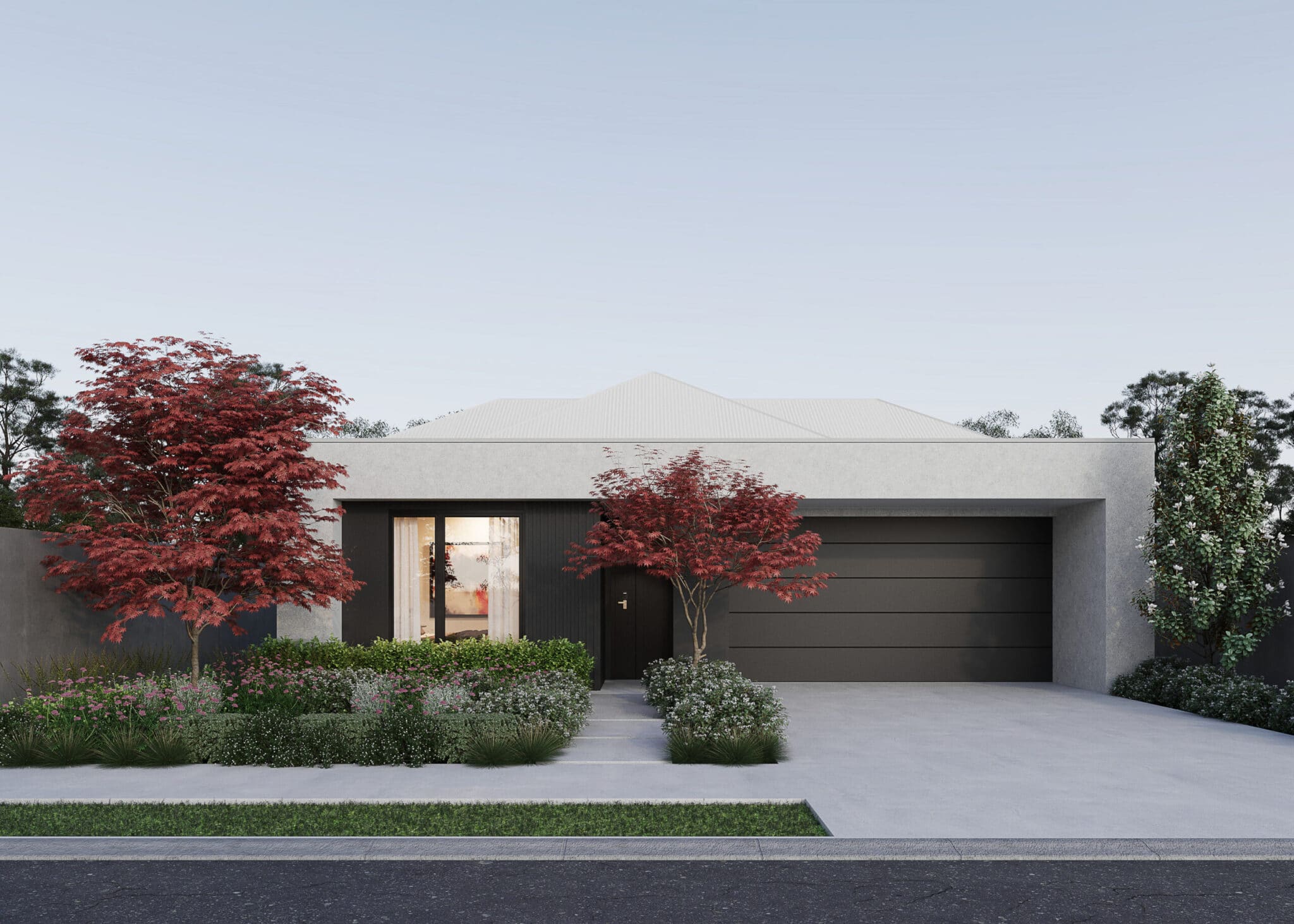
Total cost, not base price. Add the land price, building contract price, site cost allowance, and any upgrade or variation costs together. That is the real number. Some builders quote a base house price that does not include the facade shown in the image, the flooring in the display home, or the fixtures photographed on their website.
Site cost allowance. Some packages include a realistic site cost allowance. Others include a minimal figure that will be exceeded on virtually every block. Ask what the allowance covers and what triggers additional charges.
Inclusions list. Request a written inclusions list from every builder you are comparing. Go line by line. Does it include landscaping? Fencing? Driveway? Blinds? Air conditioning? Facade upgrades? Data connectivity? If any of these are excluded, price what they would cost to add.
Specification level. Not all inclusions are equal. One builder may include a basic split system; another includes ducted air conditioning. One may include a builder grade facade; another includes an architectural facade with mixed materials. Specification matters as much as inclusion.
Contract terms. Review the building contract carefully. What is the construction timeline? What are the terms for variations? What are the penalty provisions if the builder runs over time?
Builder registration and insurance. Every builder in Victoria must be registered with the Victorian Building Authority and hold domestic building insurance. Confirm both before signing.
Display home vs contract specification. If the builder has a display home, ask which items on display are standard and which are upgrades. This is where the gap between expectation and contract is widest.
The builder who presents the clearest pricing from the start is almost always the one who delivers the most predictable experience through to handover.
What to Watch for in Advertised “From” Prices
“From” prices on house and land packages are one of the most common sources of buyer frustration in new home construction. They are not lies, but they are rarely the full picture.
A “from” price typically represents the lowest possible combination of the cheapest lot in the estate and the base specification of the smallest home design. It assumes ideal site conditions, minimum inclusions, and no customisation. Almost nobody builds that version.
Here is what commonly sits outside the “from” price.
Facade. The image used in the advertisement almost always shows a premium facade. The “from” price includes the base facade, which may be a flat rendered front with none of the mixed materials, feature elements, or architectural detailing shown. The gap can be $10,000 to $30,000.
Landscaping, fencing, and driveway. Many builders exclude all three from the base price. On a standard lot, expect to add $15,000 to $30,000 for these items.
Window furnishings. Blinds or curtains throughout a home cost $5,000 to $12,000. If they are not in the contract, they are not included.
Heating and cooling. A split system in the living area is not ducted air conditioning. The cost difference is $8,000 to $15,000.
Site costs above allowance. If the package includes a $10,000 site cost allowance and the block requires $25,000 in site preparation, you carry the $15,000 difference.
Flooring. Some base packages include carpet throughout with tiles only in wet areas. Timber look flooring, stone tiles, or engineered boards are upgrades.
Fixtures and fittings. Builder grade tapware, handles, and lighting are functional but basic. The items shown in marketing imagery are almost always from a higher specification range.
When you total these additions, it is common for the final cost to exceed the “from” price by $50,000 to $80,000. That is the reality across the industry.
The solution is not to avoid house and land packages. It is to compare the total delivered cost, not the starting figure. Ask every builder: what is the move in price for this home on this block with everything I need on day one?
How Senka Structures Its House and Land Packages
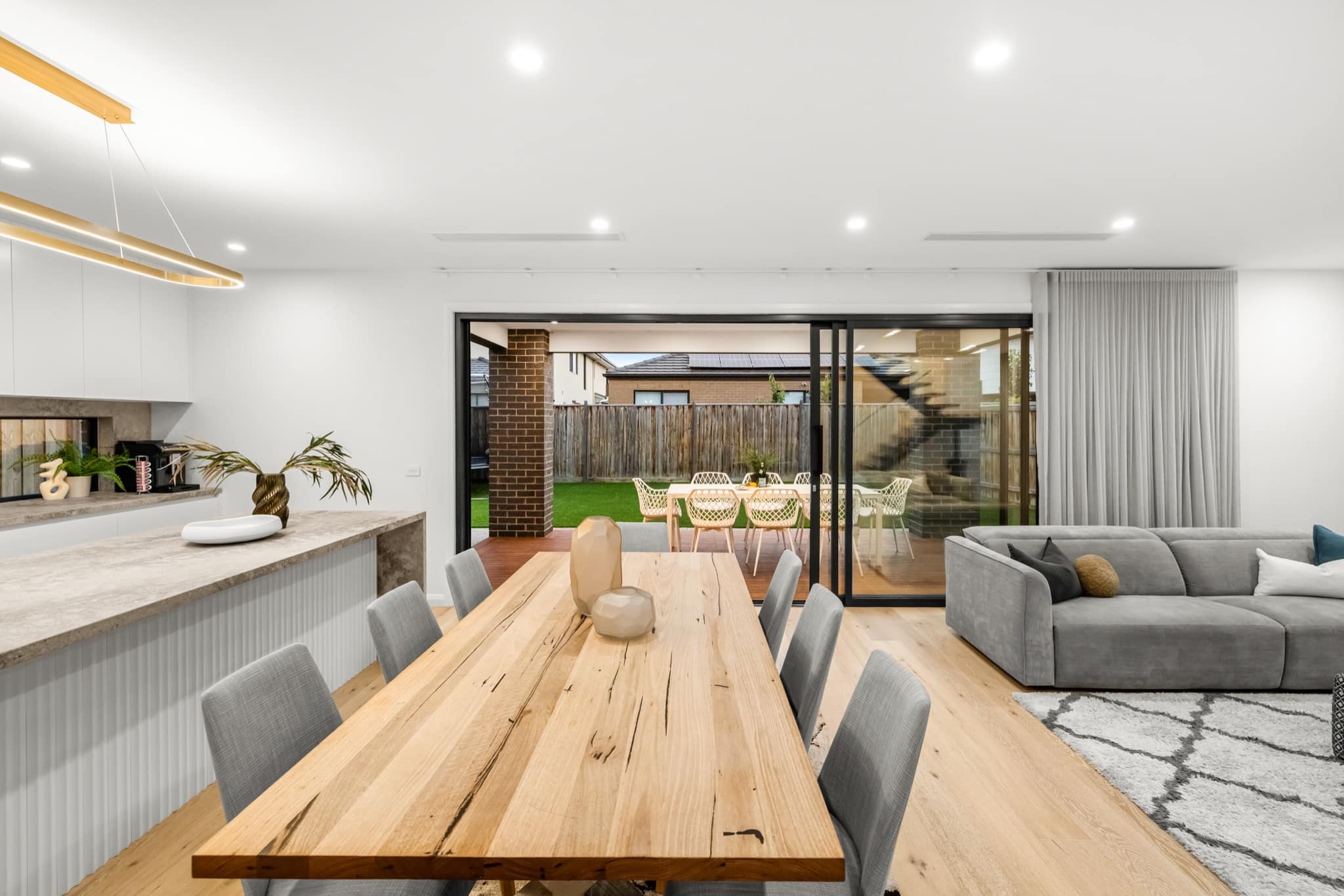
Senka approaches house and land packaging with a different principle. The contract price should represent a finished, liveable home. Not a base from which everything must be added.
Every Senka house and land package includes the following as standard:
- Landscaping and fencing. Front and rear landscaping with fencing to all boundaries. Not an allowance. Delivered.
- Blinds throughout. Every window fitted with quality window furnishings before handover.
- Architectural facade. Mixed material facades designed with intent. Not a rendered box with a feature panel.
- Concrete driveway. Full driveway to the garage, not an optional extra.
- Ducted air conditioning. Whole of home climate control, not a single split system in the lounge.
- Opticomm connectivity. Fibre to the premises, ready to connect on day one.
- Premium fixtures and finishes. Quality tapware, handles, and lighting as the baseline specification.
- 7 star energy rating. Achieved through considered design, not just insulation. Orientation, glazing, and thermal performance are built into every plan.
These are not upgrades. They are not add ons. They are the starting point.
The reason is straightforward. A home that requires another $40,000 after the contract to be liveable is not a completed home. It is a shell with a sales price. Senka prices the finished product because that is what clients are actually buying.
This also simplifies the comparison. When you assess a Senka package against a competitor, the gap between headline figures narrows significantly once you add the items the competitor excluded.
Every Senka house and land package is assessed on the specific block it sits on. The design is checked against lot dimensions, orientation, covenant requirements, and site classification. Pricing reflects actual conditions, not an idealised scenario.
The building contract is structured under an HIA format with clear terms on inclusions, exclusions, timelines, and progress payments. There are no hidden provisional sums designed to increase later. What is quoted is what is built.
For a more detailed guide to comparing builders in Melbourne, see our comparing builders guide.
Frequently Asked Questions
Are house and land packages a good deal?
They can be, but it depends on what is included. A well structured house and land package gives you price certainty, stamp duty savings, and a coordinated build process. The value lies in the total delivered cost, not the headline figure. Compare the move in ready price across builders, including all inclusions, site costs, and finishes, before judging the deal. A package that looks $30,000 cheaper on paper but excludes landscaping, air conditioning, and a driveway is not cheaper at all.
What is included in a house and land package?
At minimum, a house and land package includes the land and a building contract for a specific home design. Beyond that, inclusions vary widely between builders. Some include only the bare structure. Others include everything needed to move in. The items most commonly excluded from base packages are landscaping, fencing, driveways, blinds, air conditioning, and premium facades. Always request a written inclusions list and compare it against what you would need to spend after the contract to actually live in the home.
How long does it take to build a house and land package?
The total timeline depends on whether the land is titled or untitled. If the land is already titled, expect 12 to 18 months from contract to handover. That includes pre construction approvals (8 to 16 weeks), construction (7 to 10 months), and inspections through to practical completion. If the land is untitled and waiting on title registration, add the developer’s estimated title date to the front end. That can push the total timeline to 18 to 24 months or more. Weather, council processing times, and material availability can all influence the schedule.
Is a house and land package cheaper than buying an established home?
In many cases, yes, when you account for the full picture. Stamp duty savings alone can be $15,000 to $25,000 on a typical Melbourne purchase because duty applies only to the land value, not the building contract. You also get a home built to current energy, structural, and compliance standards with new warranties, new fixtures, and no immediate maintenance costs. An established home at the same price point may require renovation, have higher running costs, and carry hidden defects. The comparison depends on location, condition, and your priorities, but for buyers in growth corridors, the economics consistently favour building new.
Standard inclusions such as front and rear landscaping, full boundary fencing and a concrete driveway apply to Senka house and land packages. On custom builds and knockdown rebuilds the inclusion list is set by your building contract.