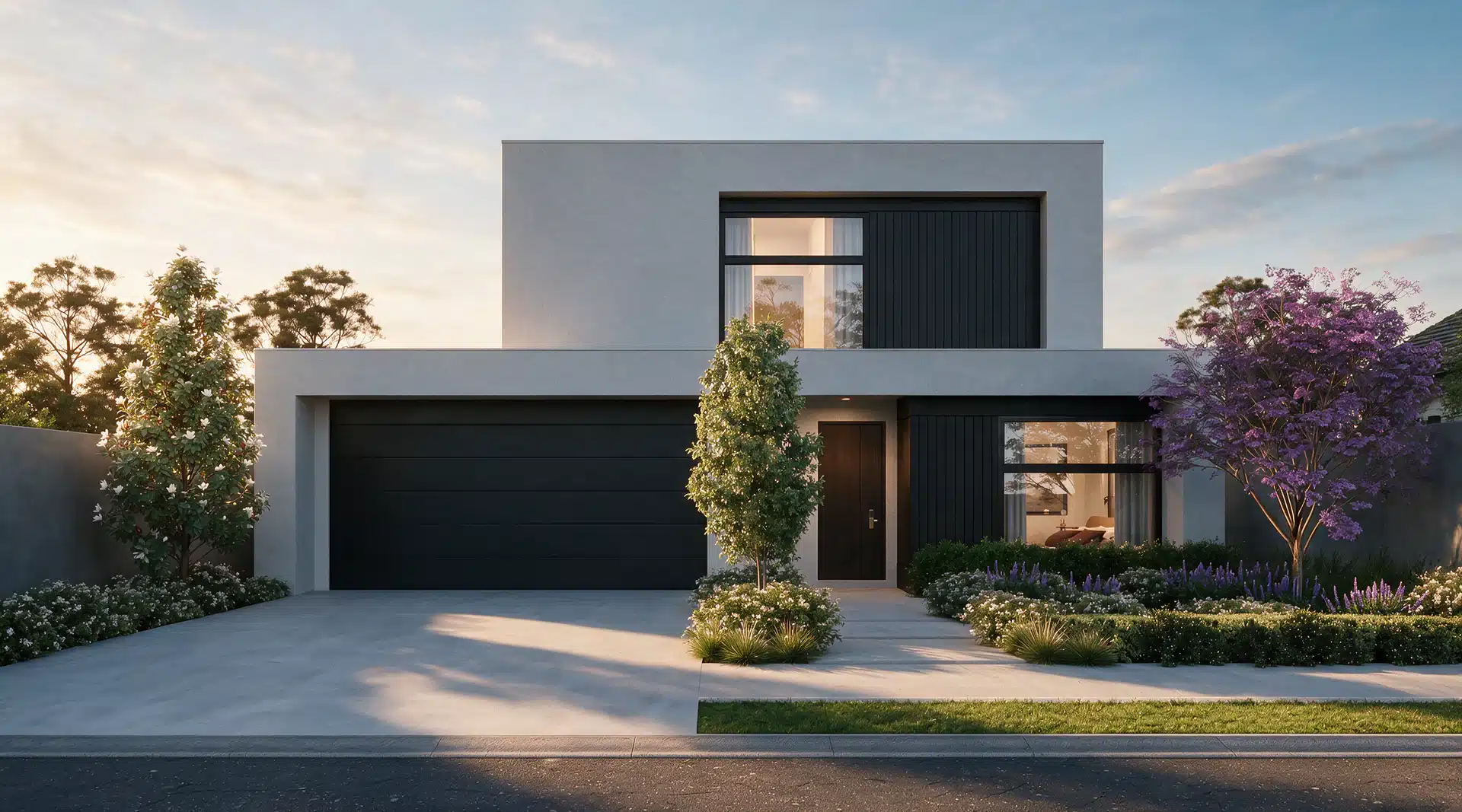
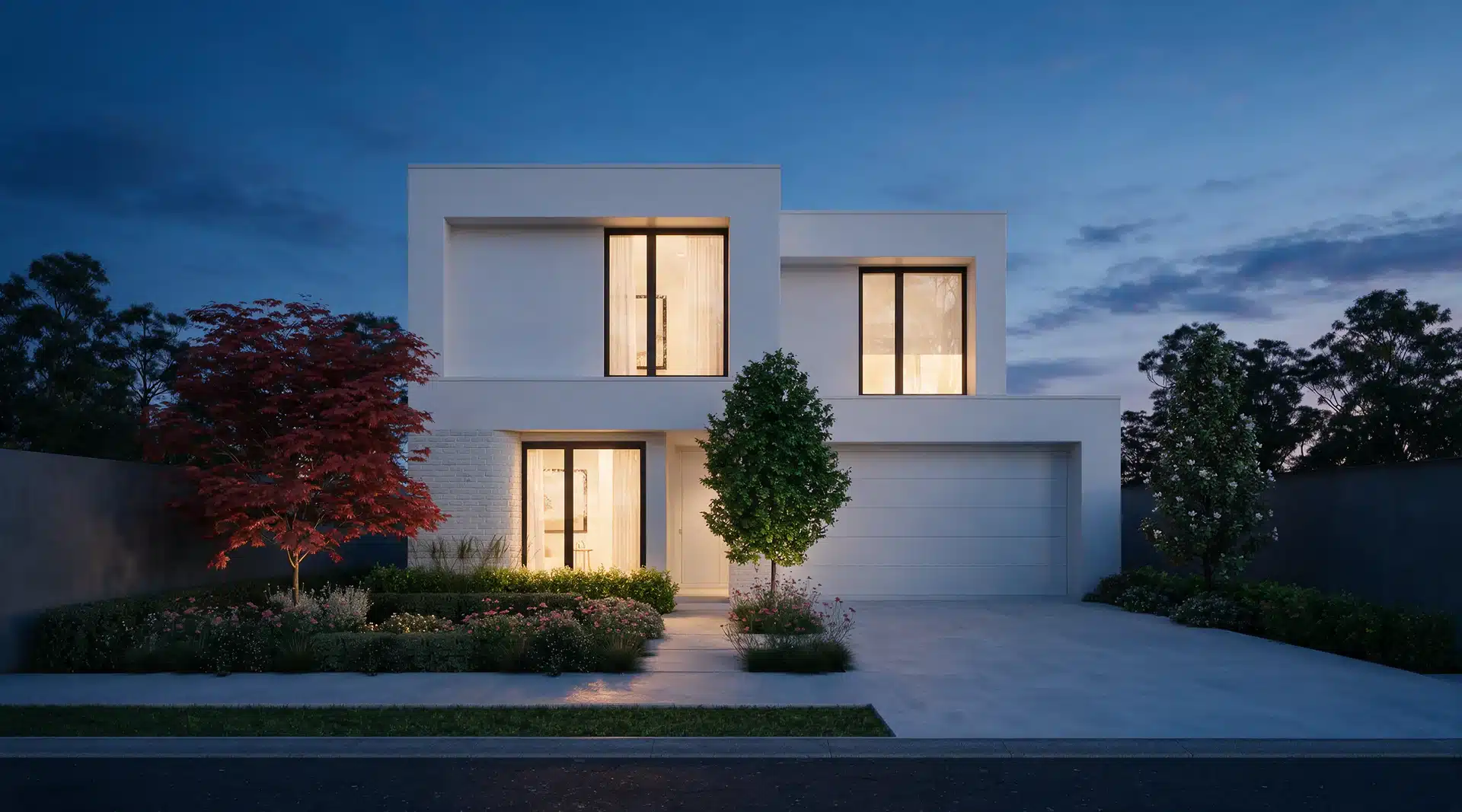
If you own an older house on a good block in an established Melbourne suburb, there are two ways to build new. A knockdown rebuild replaces the house with one new home on the full block. A dual occupancy replaces it with two homes, often a duplex or a pair of townhouses, which you can live in, rent or sell, usually after subdividing so each home has its own title.
The short answer: choose a knockdown rebuild when the priority is the home you will live in. Choose dual occupancy when the block, the zoning and your finances all support a second dwelling, and you want that second home to earn an income, fund the project or house family.
Plenty of owners face this choice. ABS approvals data analysed by PropTrack shows that between July 2019 and June 2025, 55,692 Australian homes were demolished to build another single home, and 25,480 approved projects built two homes on a block that previously held one. For the full knockdown rebuild picture, see our knockdown rebuild Melbourne guide.
The Short Comparison
| Knockdown rebuild | Dual occupancy | |
|---|---|---|
| Homes built | One | Two: a duplex, side by side, or front and rear |
| Titles | One | Usually two, once the subdivision is registered |
| Planning | Depends on your zone, lot size and overlays | A permit for the two homes, and a separate permit to subdivide |
| Space | The whole block, full setbacks and garden | Two smaller footprints sharing one block |
| Extra cost lines | None beyond demolition and one build | Subdivision, a second set of services, often a second driveway, selling costs |
| Tax | Your home sits under the main residence rules | Selling or renting the second home raises income tax, GST and land tax questions |
| Suits | Owner occupiers who want space | Investors, downsizers and families who want two households on one site |
| Main risk | Building more house than the street supports at resale | Margins that thin out once holding, selling and tax costs are counted |
What Each Option Involves
A knockdown rebuild means demolishing the existing home and building one new home on the entire block. You keep the full land area, the full setbacks and the full scope to design generous living areas, several bedrooms and real outdoor space. One home, one title, designed around how you live.
A dual occupancy means building two homes on the land: side by side on a wide block, one behind the other on a deeper block, or as a duplex sharing a common wall. A duplex is one form of dual occupancy, not a separate category. If you knock down and subdivide, each home gets its own title once the plan of subdivision is registered, so each can be sold, rented or kept independently. Our guide to building a duplex in Melbourne covers that format in detail.
The practical difference is space. Two homes means two smaller footprints, tighter setbacks, smaller yards and a design shaped by the second dwelling.
Senka builds both: knockdown rebuild projects and dual occupancy builds.
Is Your Block Eligible for Two Homes?
Eligibility for a dual occupancy comes down to three things. The first is the zone and its schedule in your council’s planning scheme. The second is any overlay on the land, such as heritage or flooding controls. The third is whether two well designed homes physically fit once the required setbacks, garden, access and parking are in place. Two similar blocks in the same suburb can get different answers, so check your specific address before you pay for design. The rules also changed in 2025, and many older guides have not caught up.
The Townhouse and Low-Rise Code. Two or more dwellings on a lot are now assessed under Clause 55, known as the Townhouse and Low-Rise Code. It uses deemed to comply standards: if a design meets a standard, the matching objective is met, and if all the standards are met there is no third party appeal. Councils also can no longer set tougher local versions of the standards for landscaping, permeability, side and rear setbacks, and walls on boundaries (City of Stonnington summary).
VicSmart for two homes on a lot. From 16 October 2025, Amendment VC288 allowed planning applications for two homes on a lot to use VicSmart. Eligible applications that meet all the relevant rules can be decided in 10 business days, against 60 days in the standard process, and neighbours do not need to be notified. Heritage, flooding and other overlays can make a site ineligible (Victorian Government, Simplifying subdivisions).
Subdivision is a separate step. A planning permit is still required to subdivide land (same source).
Physical fit. Look at frontage, depth, slope, significant trees, orientation and room for a second driveway and crossover. Minimum block size rules of thumb circulate widely, but treat any of them as a starting point. Your zone schedule and the Clause 55 standards decide what actually fits.
For a fuller eligibility check, read can you build two homes on one block and our dual occupancy Melbourne guide.
What Each Option Costs: The Lines That Matter
A dual occupancy shares some costs with a knockdown rebuild and adds cost lines a single home does not have. Reliable public figures for a like for like comparison are thin, and both options depend heavily on the site. The useful exercise is to price both options on your block and compare the full list, not just the build price.
| Cost line | Knockdown rebuild | Dual occupancy |
|---|---|---|
| Demolition, including any asbestos removal | Yes | Yes |
| Survey, soil test, design and engineering | One home | Two homes |
| Planning permit | Depends on the site | Yes |
| Subdivision: surveyor, permit and plan registration | No | Usually |
| Water, sewer and power connections | One set | Usually two, separately metered |
| Driveway and crossover | One | Often two, or one shared |
| Build | One larger home | Two smaller homes |
| Somewhere to live during the project | Yes | Yes, usually for longer |
| Interest during construction | Yes | Yes, usually on a larger loan |
| Agent, marketing and legal costs to sell | No | If you sell one home |
| Tax on a sale | Usually none on your own home | Possible income tax and GST |
| Land tax | No, if it is your home | Possible, on a home kept as an investment |
Two habits keep the numbers honest. Value the land at what it is worth today, not what you paid for it, or the profit will look bigger than it is. Then add a contingency and a time margin. In an analysis of subdivision returns, Mark Armstrong of iProperty Plan recommends a margin of at least 10% for unexpected costs, and notes that the longer the project runs, the more interest and rent you pay.
A Senka knockdown rebuild is priced to your individual site and scope, and your building contract sets out exactly what is included. Our knockdown rebuild cost guide covers the cost lines of a single rebuild.
Tax, Duty and Land Tax
Tax is where dual occupancy numbers most often go wrong. A knockdown rebuild of your own home is usually simple: you already own the land, so there is no purchase to pay duty on, and your home sits under the main residence rules. A dual occupancy where you sell or keep the second home raises three questions. How is the sale taxed? Does GST apply? Is land tax payable on a home you keep as an investment? The answers depend on your intentions and how the project is run, so speak to your accountant before you lodge a planning application.
- Duty. The State Revenue Office charges land transfer duty when property is bought or acquired in Victoria. Rebuilding where you are avoids the duty you would pay buying elsewhere.
- Income tax. The ATO’s guidance on subdividing land says that if you subdivide your home and sell the vacant land, the main residence exemption does not cover the land sold. If land is bought and subdivided with the intention of making a profit, the profit can be ordinary income rather than a capital gain.
- GST. The same ATO page notes that even a single property sale can create a GST obligation, depending on your turnover.
- Land tax. The State Revenue Office describes land tax as an annual tax on taxable land in Victoria, excluding exempt properties like your home. It applies to investment residential properties, so a second home kept as a rental can attract it.
Living With One Home or Two
The lifestyle difference is the factor many owners underweight once the numbers look good.
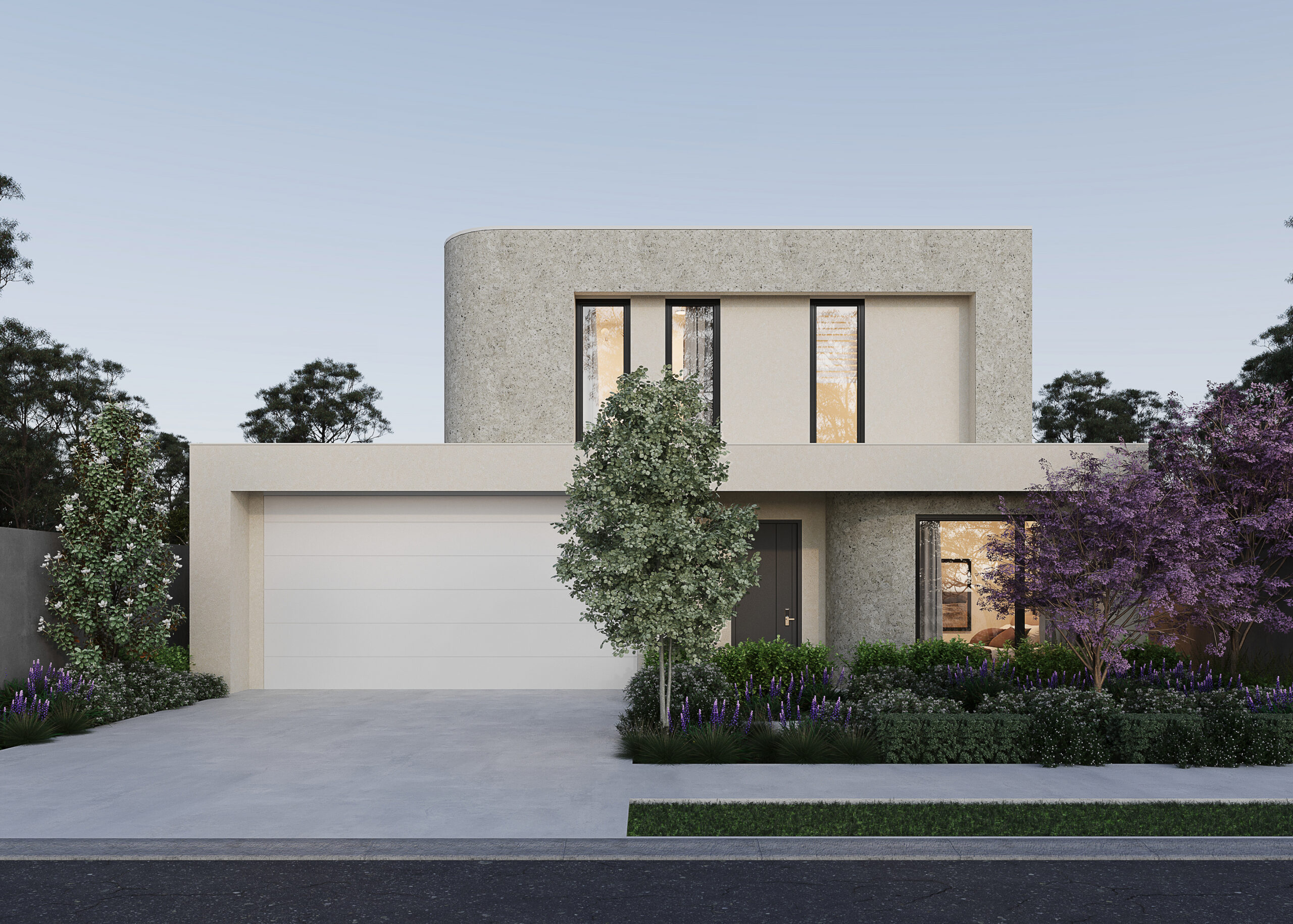
A single home on a full block gives you space: a proper backyard, side access for a trailer or boat, privacy from neighbours, and a floor plan with room for several bedrooms, a second living area and outdoor entertaining, designed entirely around your household.
A dual occupancy shares the block. Each home and each yard is smaller. If you live in one home and sell or rent the other, you share a boundary, possibly a driveway, and live close to whoever moves in. A shared driveway also means agreeing with the other owner on its upkeep. For some owners that is a fair trade. For others it undermines the reason they wanted to rebuild.
Time is part of the cost too. A dual occupancy usually takes longer than a single knockdown rebuild, because it adds a multi dwelling permit, a subdivision and two homes’ worth of trades on one site. See the knockdown rebuild process and the dual occupancy build process for each stage.
When Dual Occupancy Makes Sense
Dual occupancy makes the strongest case when several conditions line up. The block is big enough, and the right shape, for two homes that are each pleasant to live in. The zoning allows two dwellings without onerous controls. The suburb has demand for smaller, newer homes. And your goal is a financial or family outcome, not the largest possible home for yourself.
It suits several kinds of owner:
- Owner occupiers who keep one home and sell the other. The sale can offset a meaningful share of the project cost, once tax and selling costs are counted.
- Investors who keep both. Two homes on two titles give two rental incomes and two assets.
- Downsizers. Living in one new, smaller home while the other produces income or capital.
- Families who want to live side by side. Parents and adult children, siblings, or ageing parents who want to stay close but independent. Each household can finish its home to its own taste.
Senka offers a fixed build price on dual occupancy projects, subject to site findings, with site costs priced separately. For more, see our dual occupancy FAQ.
When a Single Home Is the Better Choice
A single knockdown rebuild is the better choice when your priority is the quality, space and liveability of the home you will actually live in. If you want four or five bedrooms, a double garage, generous living areas and a real garden, one home on the full block delivers that without compromise.
It is also right when the block cannot fit two homes well. On a narrow or steep block, or one constrained by trees, easements or overlays, dual occupancy often produces two compromised homes rather than one good one. And if you plan to stay for many years, the benefits of a single home compound. Dual occupancy optimises for the financial result. A single home optimises for daily life.
A Middle Path: A Small Second Dwelling
If the aim is to keep family close rather than create a second asset, a small second dwelling may do the job with less cost and process. Regulations introduced in late 2023 allow small second homes such as granny flats to be built without a planning permit. A building permit is still required, and a small second dwelling cannot be subdivided or sold separately from the main home (Victorian Government). Size and site limits apply, so check the current rules for your lot. Paired with a knockdown rebuild, it gives you one main home for your household and a separate space for a parent or adult child.
A Decision Checklist
- Do you plan to live in the new home for the long term?
- Does your zone and its schedule allow two dwellings, and are there overlays on the land?
- Do two homes physically fit: frontage, depth, slope, trees and a second driveway?
- Have you priced both options on this block, including subdivision, connections, holding and selling costs?
- Have you valued the land at today’s price, not your purchase price?
- Have you asked your accountant about income tax, GST and land tax on the second home?
- Can you fund a longer project and the time it takes to sell or lease?
- Would you be comfortable living next to whoever buys or rents the other home?
If most answers point to two homes, a dual occupancy is worth a proper feasibility check. If the first answer is a clear yes and several others are uncertain, a knockdown rebuild is usually the cleaner path.
Every Senka home, whichever path you take, includes ducted heating and cooling, stone benchtops, 900mm appliances, timber look flooring and square set cornices as standard. To talk through what your block can do, contact Senka.
Frequently Asked Questions
Is a duplex the same as a dual occupancy?
A duplex is one type of dual occupancy. Dual occupancy means two dwellings on one lot, and a duplex is two homes joined by a shared wall. Two detached homes, side by side or front and rear, are also a dual occupancy. Subdividing gives each home its own title once the plan of subdivision is registered.
Is dual occupancy more profitable than a knockdown rebuild?
Two homes on separate titles can create more total value than one home on the same block, but the margin is often narrower than the headline suggests. Subdivision, extra service connections, a longer build, interest, selling costs and tax all come out of the difference. Price both options on your block and value the land at today’s price.
Do I need a planning permit for a dual occupancy in Victoria?
In Victoria’s residential zones, generally yes, and subdividing the land needs its own planning permit. Since 16 October 2025, eligible applications for two homes on a lot can use VicSmart, which allows a decision within 10 business days without notifying neighbours. Heritage, flooding and other overlays can make a site ineligible.
How is the sale of a second home taxed?
It depends on your intentions and how the project is run. The ATO says that where land is bought and subdivided to make a profit, the profit can be ordinary income rather than a capital gain, and that even a single property sale can create a GST obligation depending on turnover. Get advice from your accountant before you start.