Financing a knockdown rebuild in Australia is different from financing a standard new build on vacant land. The main difference is that most KDR clients already own their property outright or have significant equity in it, which changes both the loan structure and the funding strategy. Understanding how to access that equity, what type of loan you actually need, and how government grants interact with a KDR project puts you in a far stronger position before you sign anything with a builder or a lender.
This guide covers the practical mechanics of financing a knockdown rebuild, from equity release through to final draw-down on your construction loan. If you are still weighing up whether a KDR is the right move, our knockdown rebuild Melbourne guide covers the broader decision in detail.
Using Equity from Your Existing Home
The single biggest financial advantage of a knockdown rebuild is that you already own the land. If your current home is worth $900,000 and you owe $250,000, you are sitting on $650,000 in equity. Lenders will typically allow you to borrow against up to 80% of your property’s current value without lenders mortgage insurance, which in this example gives you access to $470,000 in usable equity above your existing debt. That figure alone covers the build cost for most single and double storey homes in Melbourne’s middle and outer ring suburbs.
The process starts with a property valuation. Your lender will order a valuation on your existing home, which establishes the loan to value ratio and determines how much equity you can release. It is worth noting that the valuation is based on the home as it stands today, not the future value of the new build. Some clients assume the lender will factor in the completed project value at this stage, but that only comes into play later when the construction loan is assessed.
If your equity position is strong, you may be able to fund the entire demolition and rebuild without any additional savings contribution. For clients with lower equity, a combination of equity release and personal savings typically bridges the gap. The key is to have a clear picture of your equity position before you start engaging builders or selecting designs, because it directly determines what you can afford to build.
Construction Loans for Knockdown Rebuilds
A knockdown rebuild is funded through a construction loan, not a standard home loan. The critical difference is that a construction loan is drawn down in stages that match the progress of the build, rather than as a single lump sum. This means you only pay interest on the amount that has been drawn at any given time, which keeps your costs lower during the construction period.
For a KDR, the typical draw-down schedule follows the standard building stages: base, frame, lock-up, fixing, and completion. Each stage triggers a progress payment to the builder, and your lender releases the corresponding funds after an independent inspection confirms the work has been completed. On a $400,000 build, your base stage draw-down might be $60,000, with the remaining funds released incrementally over the following 8 to 12 months.
Most lenders require that you have council approved plans and a signed building contract before they will approve a construction loan. The contract needs to be a fixed price contract with a registered builder, and the plans must include all engineering and energy rating documentation. At Senka, we provide a full contract pack that includes everything your lender needs for loan approval, because delays at this stage push out the entire project timeline.
Interest rates on construction loans are typically the same as standard variable home loan rates, though some lenders charge a small premium during the construction period. It is worth comparing at least three lenders, because the approval process, draw-down flexibility, and progress inspection requirements vary significantly between banks and non-bank lenders.
How the Demolition Phase Is Funded
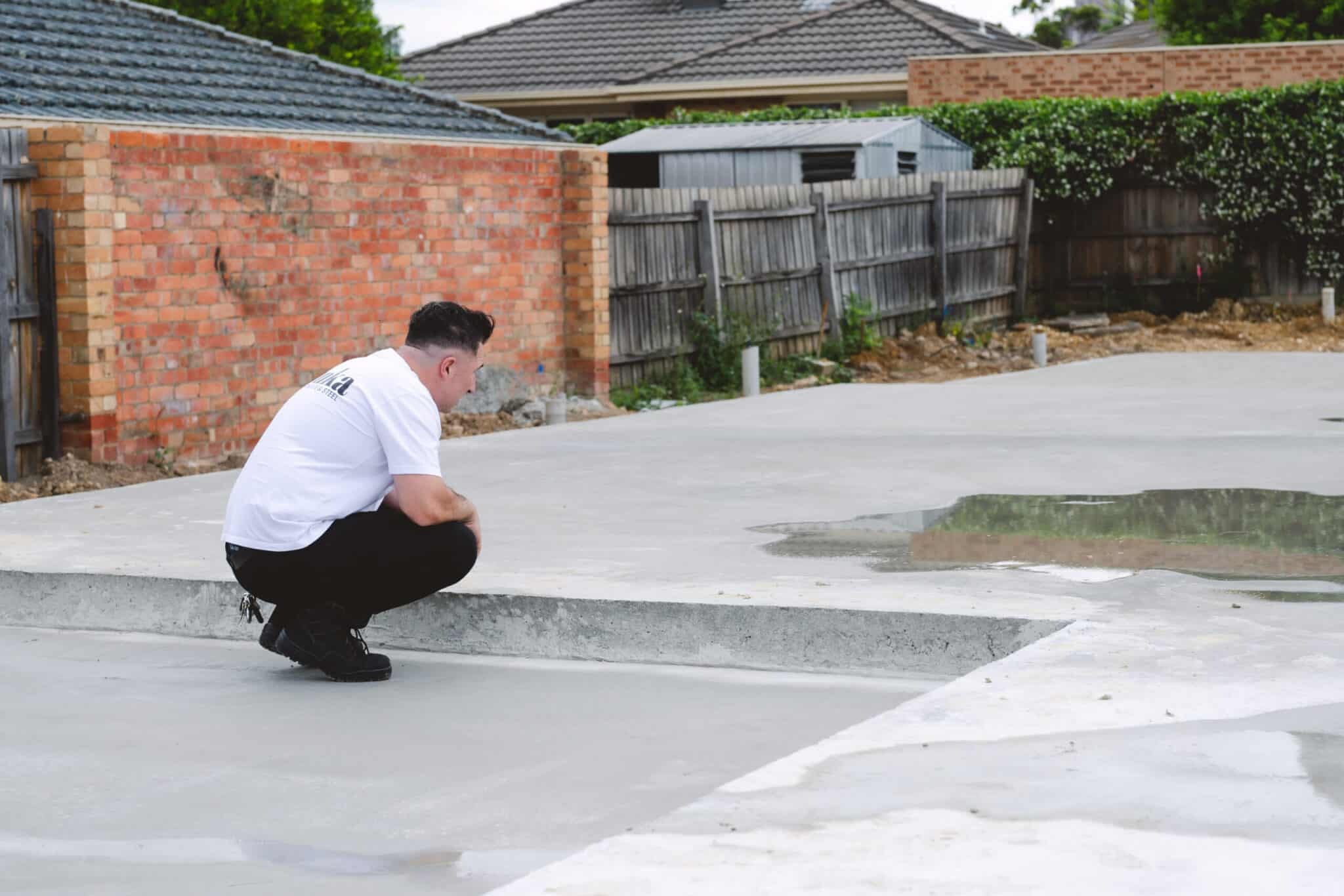
The demolition of your existing home is usually the first major cost in a KDR project, and it sits in an awkward gap that many clients do not anticipate. Most construction loans do not cover demolition, because the loan is structured around the new build contract, and demolition is a separate scope of work performed by a separate contractor. This means you typically need to fund demolition out of your own pocket or through your equity release.
Demolition costs in Melbourne generally sit between $20,000 and $50,000 depending on the size of the existing structure, whether asbestos is present, and the complexity of service disconnections. If your property contains asbestos materials, which is common in homes built before 1990, the removal adds $5,000 to $15,000 to the overall demolition cost. These are real costs that need to be factored into your total project budget from day one.
Some builders, including Senka, can include demolition coordination as part of the overall knockdown rebuild scope. This does not always mean the demolition cost is rolled into the construction loan, but it does mean the builder manages the demolition contractor, the permits, and the site preparation as a single coordinated process. This avoids the situation where a client has to independently manage a demolition while simultaneously finalising their build contract and loan application.
Government Grants That Apply to KDR
Government grants for knockdown rebuilds are more limited than those available to first home buyers on vacant land, but they do exist. The most commonly relevant grant is the First Home Owner Grant (FHOG) in Victoria, which currently provides $10,000 for first home buyers building a new home valued up to $750,000 (the contract price or total value of the home including land, site works, and variations). Critically, a knockdown rebuild on land you already own can qualify for the FHOG, provided you meet the eligibility criteria and you have never owned and lived in a residential property in Australia before. Confirm current eligibility and the regional rate (which has differed from the metropolitan rate at various times) with the State Revenue Office.
The confusion arises because many people assume the FHOG only applies to house and land packages on new estates. In fact, the grant is available for any new residential construction, including a KDR, as long as the total value of the house and land combined does not exceed $750,000. For KDR clients in higher value suburbs, this cap often disqualifies the project, but for first home buyers who inherited land or purchased an older home in a more affordable area, the grant can make a meaningful contribution to the build budget.
Stamp duty exemptions are another area worth investigating. In Victoria, first home buyers purchasing a property valued under $600,000 pay no stamp duty, and a concession applies for properties up to $750,000. If you purchased your existing property as a first home buyer and received the stamp duty exemption at that time, you have already captured that benefit. There is no additional stamp duty on the construction of the new home itself, because stamp duty applies to the land transaction, not the building contract.
Bridging Finance vs Selling First
If you need to live somewhere else during the knockdown rebuild, you face a choice: sell your current home before demolition and use the proceeds to fund the rebuild, or take out a bridging loan that lets you buy or rent elsewhere while retaining ownership of your KDR site.
Selling first is the simpler option financially. You crystallise your equity, pay off your existing mortgage, and fund the rebuild from a clean financial position. The downside is that you need somewhere to live for 12 to 18 months during the build, which means renting. In Melbourne, renting a three bedroom house costs $2,000 to $3,000 per month depending on the area, so you are looking at $24,000 to $54,000 in rent over the build period. That is a real cost that erodes the financial benefit of selling first.
Bridging finance lets you hold onto your existing property while securing temporary accommodation, but it comes with higher interest rates and the financial pressure of servicing two loans simultaneously. Most bridging loans carry interest rates 1% to 2% above standard variable rates, and lenders typically require a clear exit strategy, which in a KDR context means the completion of the new build and the repayment of the bridging facility from the construction loan.
For most KDR clients, the most practical approach is to stay in the existing home as long as possible during the planning and approval phase, then move into a short term rental once demolition is imminent. This minimises the rental period and avoids the cost and complexity of bridging finance entirely. At Senka, we work with clients to align the project timeline so that the gap between vacating and moving into the new home is as short as the construction schedule allows.
Working with Your Lender and Your Builder on Timing
The single biggest source of frustration in financing a knockdown rebuild is timing. Lenders want approved plans and a signed contract before they will approve the construction loan. Builders want a loan pre-approval before they will hold a price and commit to a build slot. And the client is caught in the middle, trying to coordinate both parties without wasting time or money.
The practical solution is to get a loan pre-approval based on your equity position and estimated build cost before you finalise your design. This gives you a confirmed budget to work with, and it gives your builder confidence that the project will proceed. Once the design is finalised and the contract is signed, the lender converts the pre-approval to a full approval, and the draw-down schedule is locked in against the building stages.
At Senka, we provide preliminary cost estimates early in the design process specifically so clients can take those numbers to their lender for pre-approval. We also provide all documentation in the format lenders require, including building contracts, approved plans, engineering reports, and energy ratings. This coordination between builder and lender is not a minor administrative detail. It is the single most important factor in keeping a KDR project on schedule, because a delayed loan approval delays demolition, which delays construction, which pushes out your completion date by months.
One additional timing consideration: if your existing home is tenanted, you need to factor in the notice period required under Victorian tenancy law. Since 25 November 2025, rental providers must provide 90 days notice if they intend to demolish the property, supported by proof of a demolition contract. Plan for this early, because it adds three months to your pre-construction timeline that cannot be compressed. Confirm current requirements with Consumer Affairs Victoria before issuing notice.
Frequently Asked Questions
Can I use my equity for a knockdown rebuild?
Yes. Equity in your existing property is the primary funding source for most knockdown rebuild projects. Your lender will value your current home and allow you to borrow against up to 80% of its value without lenders mortgage insurance. If you own your home outright or have substantial equity, this can cover the entire construction cost. Speak to your lender or mortgage broker early to get a clear picture of your usable equity before you start the design process.
Do I need to sell my house before rebuilding?
No. Most KDR clients retain ownership of their property throughout the project. You use the equity in the existing home to fund the demolition and construction of the new home. Selling first is an option if you need to maximise your available funds, but it introduces rental costs and the logistical complexity of not having a permanent home during the 12 to 18 month build period. For most clients, staying in the home during the planning phase and moving to a short term rental only when demolition begins is the most cost effective approach.
What type of loan do I need for a knockdown rebuild?
You need a construction loan, not a standard home loan. A construction loan is drawn down in stages that correspond to the building milestones: base, frame, lock-up, fixing, and completion. You only pay interest on the amount drawn at each stage, which keeps your repayments lower during the build. Once the home is completed, the construction loan converts to a standard home loan with principal and interest repayments. Your lender will need approved plans and a signed building contract before granting full approval. Read our detailed guide on construction loans for the full breakdown.
Can I get the first home owner grant for a knockdown rebuild?
You can, provided you meet the standard eligibility criteria. In Victoria, the First Home Owner Grant provides $10,000 for first home buyers building a new home where the total value of the house and land does not exceed $750,000. A knockdown rebuild qualifies as new construction. The main barrier for KDR clients is the value cap, as the combined land and build value in many established suburbs exceeds $750,000. If you are a first home buyer on lower value land, it is worth confirming your eligibility with your lender or the State Revenue Office before finalising your budget.
Fixed price contracts are available on Senka house and land packages and dual occupancy projects, subject to site findings, with turnkey completion available as an option. Custom builds and knockdown rebuilds are priced to the individual site and scope. Your building contract sets out exactly what is included for your project.