Every builder in Melbourne will tell you their house and land package is great value. Some of them are right. Most of them are quoting a number that does not include everything you need to move in. The gap between the two can be $50,000 or more, and by the time you discover it, the deposit is paid and walking away means starting again.
Comparing house and land packages properly requires looking past the headline price and into the detail. What is included, what is excluded, how the builder structures the contract, and what their track record looks like on completed homes. This guide covers how to do that comparison, line by line, so the decision you make is based on the full picture.
If you are still deciding where to buy, our Melbourne house and land guide covers where to look and what to watch for before you compare packages side by side.
Why Base Price Is a Misleading Comparison
The first number you see on any house and land listing is the base price. It is the number on the website, the signage, and the real estate portal. It is also the least useful number in the entire comparison.
Base price in the house and land market represents the land at its listed figure combined with the building contract at its lowest specification. It assumes the cheapest facade, the most basic internal finishes, a site cost allowance based on ideal soil conditions, and the exclusion of items that most people consider essential: landscaping, fencing, driveways, blinds, air conditioning, and quality fixtures.
Nobody builds the base price version. It exists as a marketing entry point, designed to appear on comparison lists and attract initial inquiries. The home you will actually build, and the home shown in the marketing images, costs more.
The danger is not that base prices exist. The danger is that buyers compare base prices across builders and assume the lowest number represents the best deal. A builder quoting $440,000 with minimal inclusions will cost more in total than a builder quoting $490,000 with comprehensive inclusions. The $50,000 gap is an illusion that disappears once you add what the first builder excluded.
The only meaningful comparison is the total move in cost. That is the land, the building contract, all inclusions, all site costs, and every item required to live in the home on day one. That is the number. Everything else is noise.
Inclusions Checklist: What to Compare Line by Line
The inclusions list is the most important document in any house and land comparison. It tells you what you are getting for the price quoted. Without it, you are comparing labels, not products.
Here is the checklist. Go through it with every builder you are considering.
| Inclusion Item | Builder A | Builder B | Builder C |
|---|---|---|---|
| Landscaping (front and rear) | |||
| Side and rear fencing | |||
| Concrete driveway and crossover | |||
| Blinds or window furnishings | |||
| Ducted air conditioning (not split system) | |||
| Architectural facade (render, cladding, mixed materials) | |||
| Stone benchtops to kitchen and bathrooms | |||
| 900mm cooktop and oven | |||
| Quality tapware throughout | |||
| Timber or timber look flooring to living areas | |||
| Square set cornices | |||
| Opticomm or fibre connectivity | |||
| 7 star energy rating (engineered, not minimum compliance) | |||
| Coloured concrete driveway (if applicable) | |||
| Downlights throughout | |||
| Premium door hardware | |||
| Soft close cabinetry | |||
| Shower niches | |||
| Extended height ceilings (2700mm) | |||
| Exposed aggregate or paved alfresco |
For every line where the answer is “not included” or “upgrade,” get a price. Then add those prices to the base quote. That total is the real number you are comparing.
A builder who includes 18 of 20 items at a higher base price is a fundamentally different proposition to a builder who includes 8 of 20 at a lower base price. The comparison only makes sense when you are measuring the same scope.
For a detailed look at what should be in every package, see our guide on what is included in a house and land package.

How to Identify Hidden Costs in a Building Quote
Hidden costs in a building quote are not always intentional deceptions. Some are structural features of how the industry prices work. Understanding where they appear helps you catch them before they become variations.
Provisional sums. A provisional sum is an estimated amount included in the contract for an item where the exact cost is not known at the time of signing. Common examples include site costs, stormwater connections, and retaining walls. The provisional sum is a placeholder. If the actual cost exceeds it, you pay the difference.
The risk with provisional sums is that some builders set them deliberately low to keep the headline price down. A $10,000 provisional sum for site costs on a block that will clearly require $25,000 in work is not an estimate. It is a strategy.
Ask: How was this provisional sum calculated? Is it based on the geotechnical data for this specific lot? What happens if the actual cost exceeds the allowance?
Prime cost items. A prime cost (PC) item is a dollar amount allocated for a specific product where the buyer will make the final selection. Commonly applied to appliances, tapware, tiles, and light fittings. If the PC amount is $500 for a cooktop and the cooktop you select costs $1,200, you pay the $700 difference.
Ask: What brand and model does the PC amount actually buy? Can I see a product at the PC price point so I know what the baseline looks like?
Site cost exclusions. Site costs cover everything required to prepare the block for construction: earthworks, retaining, rock removal, tree removal, service relocation, and additional foundation engineering. Some builders include a generous fixed site cost. Others include a minimal allowance and treat everything beyond it as a variation.
Ask: Is the site cost fixed or provisional? Has a geotechnical report been completed for this lot? What happens if rock, fill, or extreme soil reactivity is encountered?
Developer levies and contributions. Some estates charge developer contributions, community facility levies, or infrastructure charges that are not included in the land price or the building contract. These can range from $2,000 to $10,000 and are sometimes only disclosed in the fine print of the estate sales documentation.
Ask: Are there any developer contributions, levies, or charges beyond the land purchase price that I need to budget for?
Council and authority fees. Building permits, planning overlays, and authority fees are usually included in the building contract, but not always. Confirm whether the quoted price includes all regulatory costs or whether some are treated as disbursements.
Understanding the full cost to build a house in Melbourne means accounting for every line, not just the ones that appear on the front page of the quote.
Fixed Price vs Cost Plus
There are two primary contract structures used in residential building, and the one you sign determines how much financial certainty you have throughout the build.
Fixed price contracts. The building contract states a total price for the specified scope. Barring variations initiated by the buyer or unforeseen site conditions outside the builder’s control, the contract price is the price you pay. Progress payments are drawn at defined stages based on a percentage of the contract sum.
Fixed price contracts are the standard in house and land packaging. They give the buyer price certainty and the builder a defined scope to deliver against. The risk sits with the builder if material costs increase or trades run over budget. The buyer’s exposure is limited to client initiated variations and legitimate provisional sum adjustments.
Cost plus contracts. The builder charges the actual cost of materials and labour plus a management fee or margin (typically 10 to 20 percent). The buyer sees every invoice and pays the actual cost of the build as it progresses. There is no fixed total price at the start of the project.
Cost plus contracts are sometimes used for high end custom builds where the scope is evolving or the specifications are not finalised. They offer flexibility but remove price certainty. The final cost is not known until the build is complete, and there is limited incentive for the builder to control costs because their margin increases as the cost rises.
Which is better for house and land? Fixed price. Every time.
The entire value proposition of a house and land package is defined scope at a defined price. If the builder is proposing a cost plus structure on a standard house and land build, that is a red flag. It suggests either that the scope is not properly defined or that the builder is unwilling to carry the cost risk.
Contract structure varies by product. Our house and land packages are fixed price, including site costs, and turnkey is optional rather than standard. Custom builds and knockdown rebuilds are priced to your site and design. Confirm which structure applies to your project before signing. On a fixed price package, the price quoted is the price paid. The scope is documented in the specification schedule. Variations only occur if the client requests a change.
Builder’s Track Record: How to Verify
A package is only as reliable as the builder behind it. Verifying the builder’s credentials and track record before you sign a contract is not optional. It is the most important due diligence step in the process.
Victorian Building Authority registration. Every builder in Victoria must hold a current registration with the VBA. The registration number should appear on the building contract and can be verified on the VBA’s public register. If the builder cannot provide a registration number or it does not appear on the register, do not proceed.
Domestic building insurance. For building contracts above the legislated threshold, the builder must hold domestic building insurance (also known as builders warranty insurance). This protects the homeowner if the builder dies, disappears, or becomes insolvent during or after the build. Confirm the insurance certificate before signing.
Average build time. Ask the builder for their average construction timeframe on their last 10 completed homes. The answer should be specific and consistent with the estimate in your contract. If the average is 12 months and the contract says 8, question the discrepancy.
Average variation cost. Request the average variation amount across the builder’s recent completions. A builder with comprehensive inclusions should have a low average because there is less to add during construction. A high average signals that the base price is not the real price and that buyers are routinely paying more than quoted.
Client references. Ask to speak with two or three recent clients. Not testimonials selected for the website. Actual clients who have completed a build in the last 12 months and can speak to the experience, communication, quality, and any issues encountered.
Display homes vs delivered homes. If the builder has a display home, ask which items on display are standard inclusions and which are upgrades. Then ask to see photos of a recently completed standard specification home. The gap between the two tells you what the buyer actually receives versus what is showcased.
Defect resolution process. Every new home has minor items that require attention after handover. Ask the builder how defect claims are handled, what the response time is, and whether they have a formal maintenance process. The answer reveals whether the builder’s commitment continues beyond handover.
For a comprehensive evaluation framework, see our guide on how to choose a home builder.
Display Home vs Standard Specifications
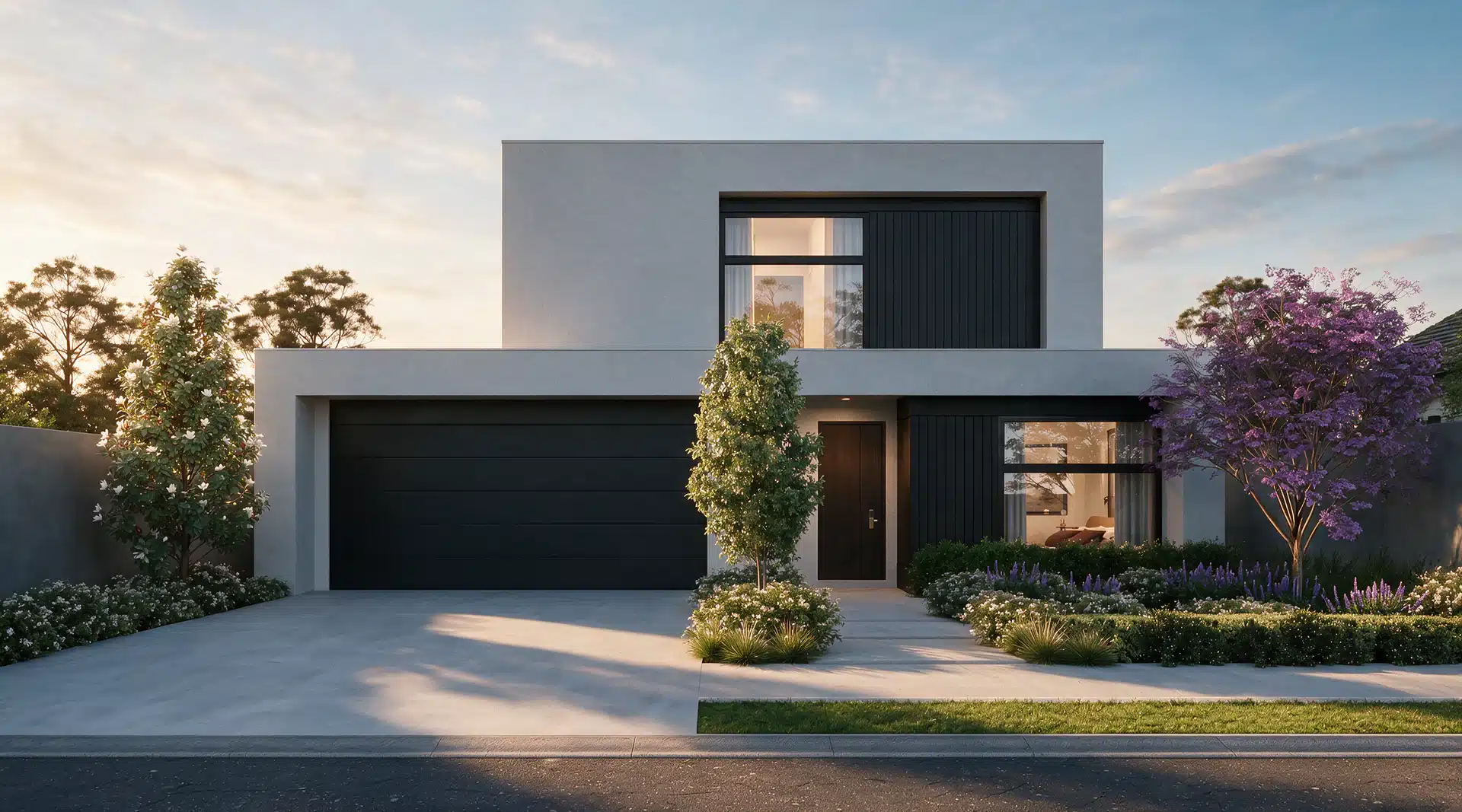
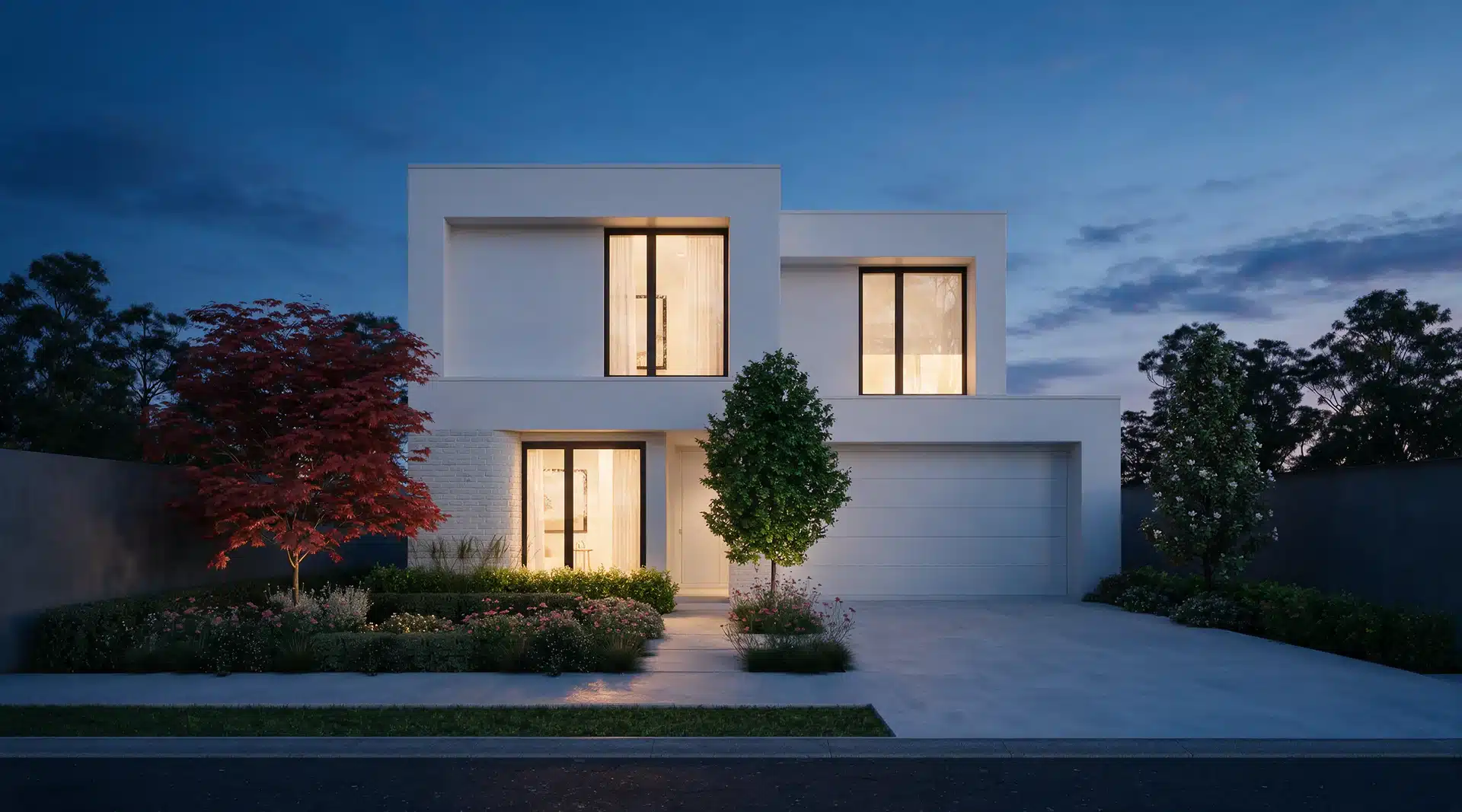
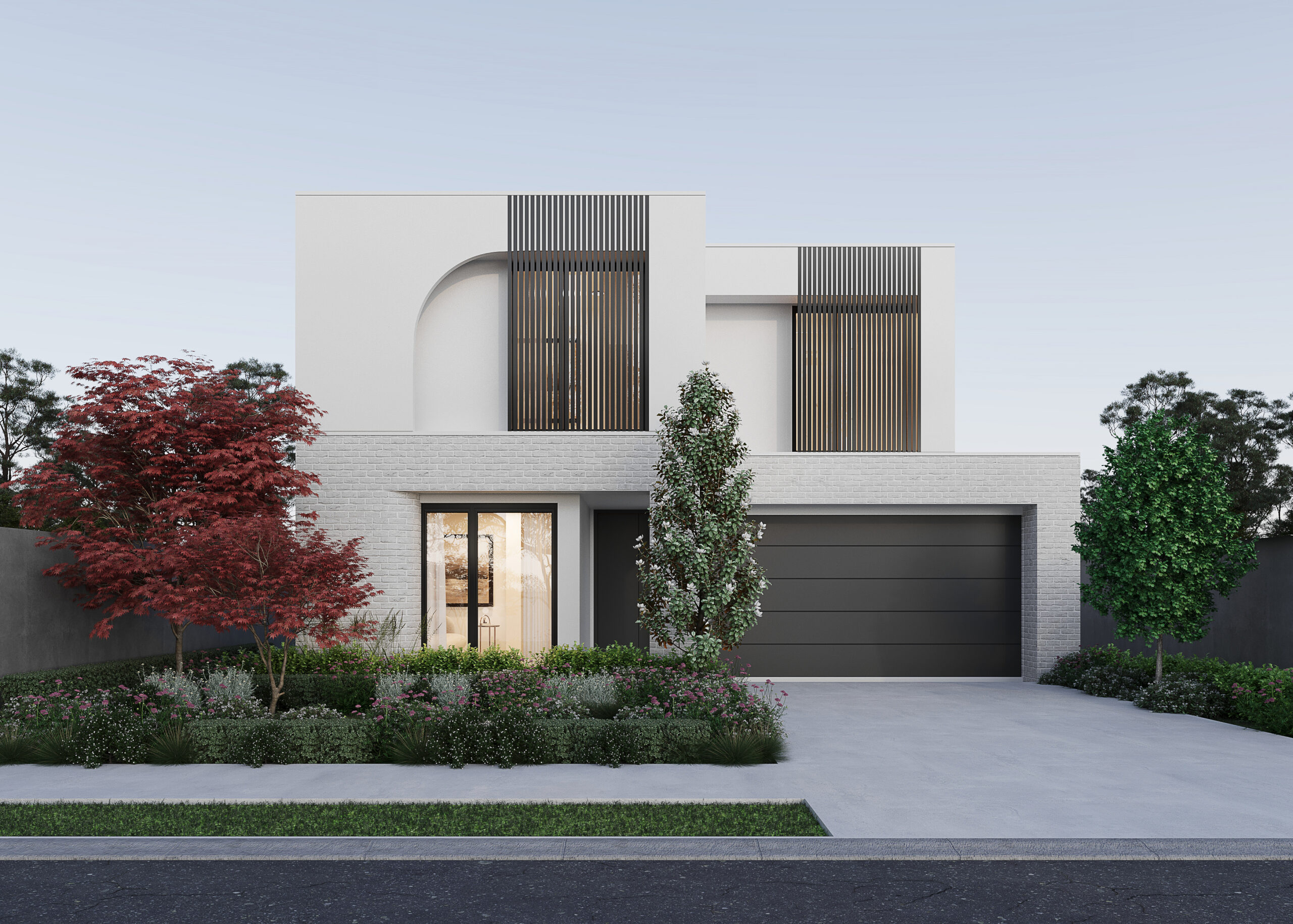
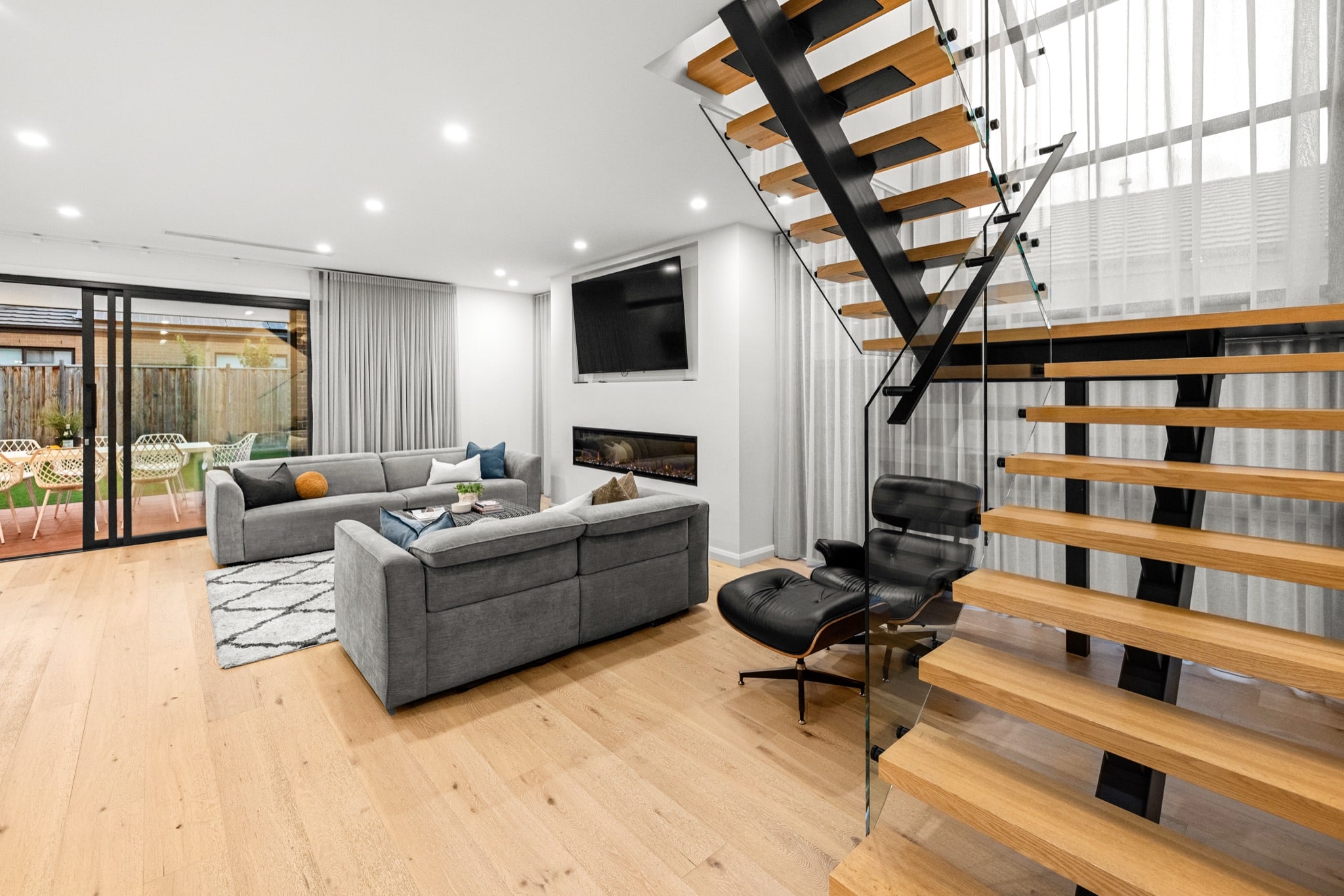
Display homes are designed to sell. They are styled, furnished, and finished to a level that represents the builder’s best work. They are also frequently finished to a specification that is above the standard contract level.
This is not dishonest if it is disclosed. The problem is that disclosure often happens after the buyer has fallen in love with the display and signed a contract for the base specification.
Common differences between display and standard:
- Facade. The display facade typically features mixed materials, rendered elements, feature cladding, and architectural detailing. The standard facade may be face brick with minimal articulation.
- Flooring. Display homes often feature engineered timber, large format tiles, or natural stone. Standard contracts frequently specify carpet to bedrooms and basic tiles to wet areas and living spaces.
- Kitchen. Display kitchens usually include stone benchtops, 900mm appliances, feature lighting, glass splashbacks, and premium cabinetry. Standard specifications may include laminate benchtops, 600mm appliances, and basic cabinetry.
- Bathrooms. Floor to ceiling tiles, frameless shower screens, freestanding baths, and designer tapware are common in display bathrooms. Standard contracts often specify half height tiles, framed shower screens, and builder grade fixtures.
- Ceilings. Display homes frequently have 2700mm or higher ceilings with square set cornices. Standard specification is often 2400mm or 2550mm with coved cornices.
- Lighting. Pendant lights, feature downlights, and architectural lighting are display additions. Standard packages include basic batten holders or standard downlights.
How to use this in your comparison. When you visit a display home, take photos and notes. Then request the standard specification schedule and compare every item you noticed against what the contract includes. For every difference, get a price to upgrade. This gives you the true cost of building what you saw.
At Senka, the standard specification on every house and land package is designed to reflect what you see in our display homes. Stone benchtops, ducted air conditioning, architectural facades, quality fixtures, and timber flooring are included in every contract. The gap between display and standard is narrow because the standard is set high. Every Senka house and land package is offered on a fixed price contract, with turnkey completion available if you want the home finished and ready to move into.
A Printable Comparison Template
Use this template when evaluating house and land packages from different builders. Fill in each column and compare the total delivered cost, not the base price.
Package Details
| Detail | Builder A | Builder B | Builder C |
|---|---|---|---|
| Estate and lot number | |||
| Land price | |||
| Building contract price (base) | |||
| Site cost (fixed or provisional?) | |||
| Total base package price |
Inclusions Check
| Item | Builder A (Y/N/Cost to add) | Builder B (Y/N/Cost to add) | Builder C (Y/N/Cost to add) |
|---|---|---|---|
| Landscaping (front and rear) | |||
| Fencing (side and rear) | |||
| Concrete driveway | |||
| Blinds throughout | |||
| Ducted air conditioning | |||
| Architectural facade | |||
| Stone benchtops | |||
| 900mm appliances | |||
| Quality tapware | |||
| Timber flooring to living areas | |||
| Square set cornices | |||
| Fibre connectivity | |||
| Extended ceilings (2700mm) | |||
| Alfresco area | |||
| Downlights throughout |
Total Cost Comparison
| Cost Element | Builder A | Builder B | Builder C |
|---|---|---|---|
| Base package price | |||
| Excluded inclusions (total to add) | |||
| Site cost adjustment (if provisional) | |||
| Developer levies or contributions | |||
| Total move in cost |
Builder Verification
| Check | Builder A | Builder B | Builder C |
|---|---|---|---|
| VBA registration number | |||
| Domestic building insurance confirmed | |||
| Average build time (last 10 homes) | |||
| Average variation cost (last 10 homes) | |||
| Fixed price or cost plus contract | |||
| Client references provided | |||
| Display vs standard specification gap |
The builder with the lowest total move in cost, a fixed price contract, comprehensive inclusions, and a verified track record is the one worth signing with. Not the one with the lowest number on the website.
Frequently Asked Questions
How do I compare house and land packages from different builders?
Compare the total move in cost, not the base price. Request the full specification schedule from each builder and check every inclusion line by line. Add the cost of any excluded items to the base price to arrive at the real figure. Then compare the builders themselves: VBA registration, insurance, average build time, average variation cost, and client references. The builder with the lowest total cost and the most transparent process is the better choice, regardless of where their base price sits.
What hidden costs should I look for in a house and land package?
The most common hidden costs are provisional sums set deliberately low for site works, prime cost items that do not cover the products shown in marketing, excluded essentials like landscaping, fencing, driveways, blinds, and air conditioning, and developer levies not disclosed upfront. Some builders also exclude facade treatments shown in advertising images. Ask every builder: what is the total cost to move in to this home with everything I need? If the answer is significantly higher than the advertised price, those are your hidden costs.
Is fixed price or cost plus better for a new build?
Fixed price is better for house and land packages. A fixed price contract gives you certainty on the total cost, with the builder carrying the risk of material and labour increases. Cost plus contracts charge you the actual cost plus a margin, which means the final price is not known until the build is complete. Cost plus suits custom architectural projects with evolving scopes, but for a defined house and land package, fixed price is the appropriate and expected structure.
How do I know if the display home matches the standard specification?
Ask the builder directly. Request a list of every item in the display home that is an upgrade from the standard specification, along with the cost of each upgrade. Then compare the standard specification schedule against what you see on display. Common differences include facade materials, flooring, benchtop materials, appliance sizes, ceiling heights, cornice profiles, and lighting. If the builder cannot or will not provide this comparison, the gap is likely significant.
What is a good average variation cost for a builder?
A low average variation cost indicates that the builder’s base price and inclusions are realistic and comprehensive. Builders with strong inclusion sets typically report average variations under $10,000, driven primarily by client initiated design changes rather than scope gaps. Builders with stripped base prices may report average variations of $30,000 to $60,000 or more, which represents the cost of adding what should have been included from the start. Always ask for this figure and compare it across builders.
Should I get a building contract reviewed before signing?
Yes. A building contract is a legally binding document that governs the scope, price, timeline, and terms of your build. Have it reviewed by a solicitor or conveyancer who specialises in domestic building contracts. They will check the specification schedule, variation clauses, payment terms, dispute resolution provisions, and insurance requirements. The review typically costs $500 to $1,500 and is one of the most worthwhile investments in the entire process.
Fixed price contracts are available on Senka house and land packages and dual occupancy projects, subject to site findings, with turnkey completion available as an option. Custom builds and knockdown rebuilds are priced to the individual site and scope. Your building contract sets out exactly what is included for your project.